Wheel Size Explained: What Fits and What Changes
A wheel fits only when bolt pattern, center bore, width, diameter, offset, load rating, and brake clearance all match your vehicle, and the new tire keeps overall diameter within about ±3% of stock. Miss one measurement and you can end up with rubbing, vibration, damaged studs, ABS and speedometer errors, or a wheel that will not mount at all. This guide covers what must stay fixed, what can change safely, and how wheel size affects clearance, ride, handling, range, and tire cost.
Think of wheel size as a fitment system. Some checks are fixed: bolt pattern, center bore, load rating, brake clearance, and lug-seat type. Others let you tune the setup within limits: diameter, width, offset, and tire sidewall. Most failed swaps come from width and offset changes, rubbing at full lock, contact under compression, or spoke-to-caliper interference, not from diameter alone.
Wheel size is a fitment system, not one number
The measurements that must match
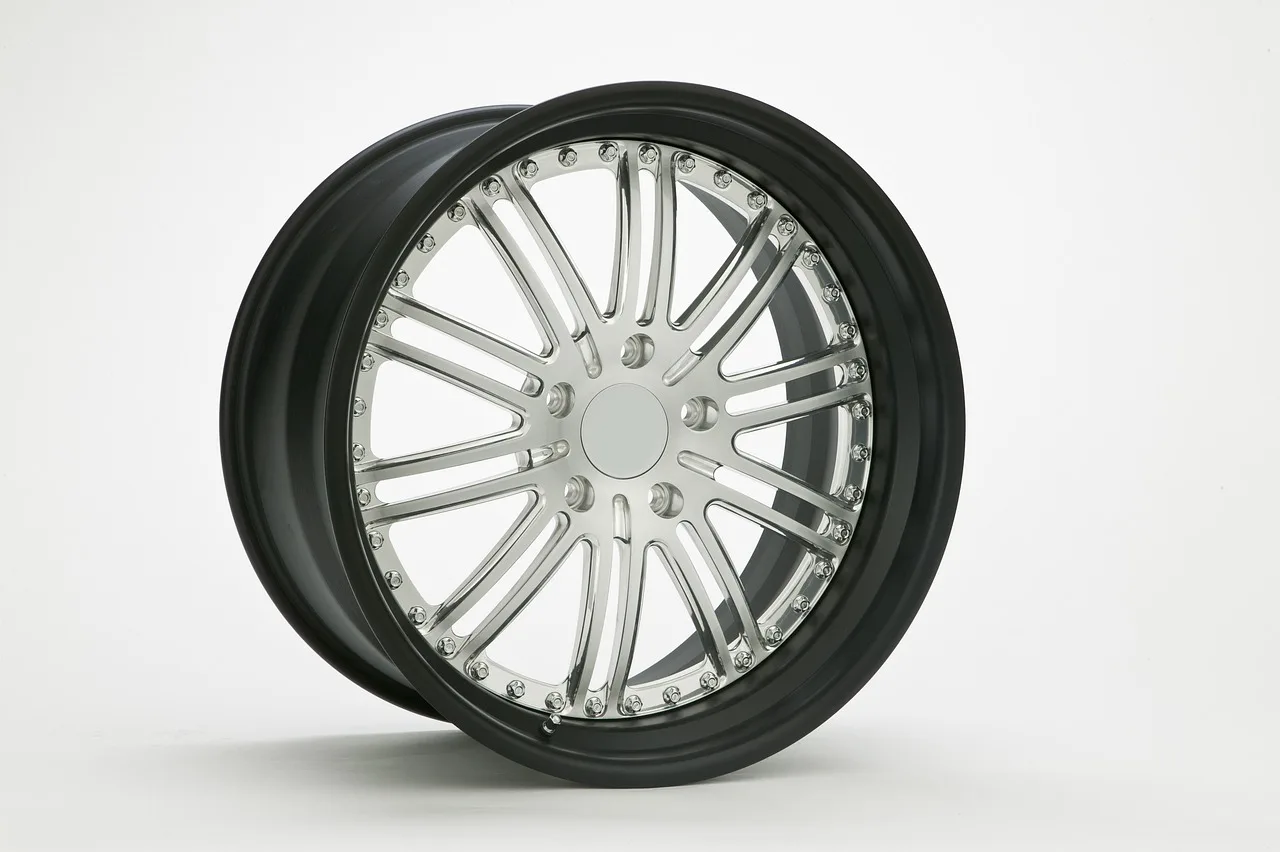
Start with the parts that do not allow guesswork. Bolt pattern must match the hub exactly, such as 5×112, 5×114.3, or 5×120. The wheel’s center bore must clear the vehicle hub. Load rating for both wheel and tire must meet or exceed the vehicle requirement. Brake clearance must work at the barrel and at the spokes. Lug-seat type must also match the hardware: cone, ball, or flat seat.
If one of those points is wrong, the swap ends there. A 5×112 wheel will not normally fit a 5×114.3 hub. A wheel with too small a center bore will not seat on the hub. A wheel that clears the caliper by diameter can still hit the caliper face if the spokes curve inward too early.
The measurements you can change within limits
Diameter, width, offset, and tire sidewall can change, but only after the fixed checks pass. Wheel diameter is measured in inches, and the tire must have the same bead-seat diameter: a 17-inch wheel needs a 17-inch tire. Passenger cars commonly use 15-, 16-, 17-, 18-, 19-, and 20-inch wheels, with some larger applications above that.
Wheel width is also measured in inches. It changes which tire section widths fit correctly, how square or stretched the sidewall sits, and how much room remains to the strut inside and the fender outside. Offset is measured in millimeters. Positive offset pulls the wheel inward, zero offset centers the mounting pad, and negative offset pushes the wheel outward.
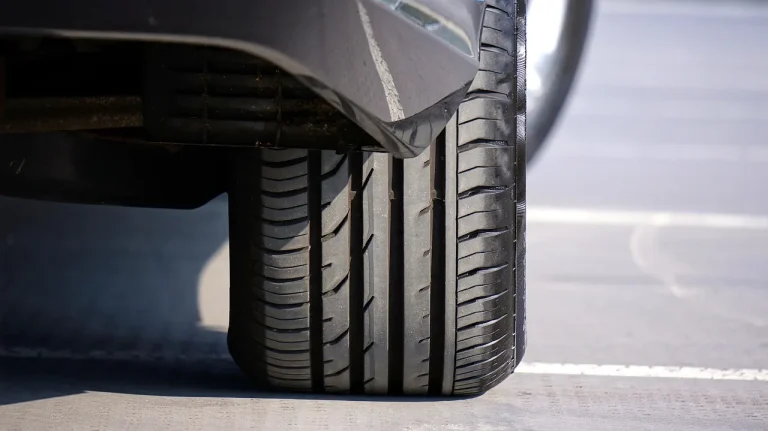
Tire sidewall height comes from width and aspect ratio. A 225/45R17 has a sidewall height of 225 × 0.45 = 101.25 mm. That sidewall, plus wheel diameter, sets the overall tire diameter used to keep speedometer and gearing changes under control.
Why most fitment failures come from width and offset
Diameter gets most of the attention because it is easy to spot. Width and offset decide where the wheel and tire actually sit. Add 1 inch of wheel width and half of that change goes inward and half outward before offset even enters the picture. Then a lower offset pushes the whole package farther out, while a higher offset tucks it back in.
A common mistake is comparing only 17-inch to 18-inch and assuming everything else will work out. An 18×8.5 ET35 wheel can sit much farther outward than a stock 17×7 ET50 wheel, even if overall tire diameter stays close to stock. That is how a car clears in the driveway yet rubs the fender liner at full lock or over a dip.
What wheel size fits my car?
The correct size starts with the stock wheel and tire specs listed for that exact vehicle, trim, and brake package. Use the door-jamb tire placard, owner’s manual, and wheel markings to identify the baseline, then compare bolt pattern, center bore, width, offset, load rating, and brake clearance before changing diameter or tire size.
Where to find the stock wheel and tire specs
Start with the factory sources that tie directly to your vehicle. The driver-side door-jamb sticker or tire placard lists factory tire size and recommended pressure. The owner’s manual often lists alternate factory wheel-and-tire packages. The wheel itself commonly has cast or stamped markings on the back of a spoke or inner barrel.
Wheel markings often look like 17x7J ET45, plus a bolt pattern and center-bore figure. Tire codes look like 225/45R17. The final number in the tire size must match the wheel diameter.
How to read wheel markings and tire size codes
Read a wheel marking from left to right. In 18×8 ET40, 18 is diameter in inches, 8 is width in inches, and ET40 is a +40 mm offset. A tire code such as 235/40R18 means 235 mm section width, 40% aspect ratio, and 18-inch wheel diameter.
Overall tire diameter can be estimated with a simple calculation:
- Sidewall height = tire width × aspect ratio
- Overall tire diameter = wheel diameter in mm + 2 × sidewall height
For 225/45R17, wheel diameter is 17 × 25.4 = 431.8 mm. Overall diameter is 431.8 + 202.5 = 634.3 mm.
Vehicle-specific limits for sedans, SUVs, trucks, and EVs
Sedans often have less room between the inner tire shoulder and the strut, and less space at the fender liner during steering. SUVs usually offer more vertical clearance, but their higher curb weight puts more pressure on wheel and tire load rating. Trucks add another check: turning clearance with larger tires, especially near the rear of the front fender and during suspension compression. EVs often combine high curb weight, large brakes, and low-rolling-resistance tire needs, so load index and caliper clearance need closer attention.
Say your crossover came with 235/55R18 and a high wheel load requirement. A stylish 20-inch wheel may physically mount, but if the wheel load rating falls below the axle demand or the new tire load index drops, the swap is wrong even if the bolt pattern and diameter check out.
Which measurements must stay compatible?
Bolt pattern, lug-seat type, center bore, load rating, brake clearance, and TPMS fitment must all remain compatible because they determine whether the wheel mounts safely and works with the vehicle’s systems. These are pass-or-fail checks. If any one fails, changing tire size or offset cannot rescue the swap.
Bolt pattern and seat type
Bolt pattern combines lug count and pitch circle diameter. A 5×112 wheel has five lugs on a 112 mm circle. A 5×114.3 wheel looks close, but it is not the same. Mixing them can damage studs or prevent proper seating.
Lug-seat type matters too. Wheels designed for ball-seat hardware should not be clamped with cone-seat bolts or nuts, and flat-seat wheels need the correct shank-style hardware where specified. A hardware mismatch can loosen a wheel even if the pattern itself is correct.
Center bore, hub-centric fit, and hub rings
The center bore is the hole in the middle of the wheel. It must be at least as large as the hub pilot on the vehicle. If the bore is smaller, the wheel will not go on. If it is larger, the wheel may need hub-centric rings so the wheel centers properly on the hub instead of relying only on the lug hardware.
Hub-centric fit reduces the chance of vibration from an off-center mount. Lug-centric mounting exists on some vehicles and wheel designs, but it requires the correct hardware and careful installation. For most street swaps, matching the bore or using proper hub rings is the safer path.
Load rating, axle load, and EV or towing demands
Wheel and tire load capacity must meet the vehicle’s requirement. That matters even more on SUVs, trucks, vehicles used for towing, and EVs with high curb weight. A wheel can fit physically and still be unsuitable if its load rating is too low.
Check the wheel’s published load rating and the tire’s load index. Compare them with the vehicle placard and any higher-load requirement tied to towing packages or factory upsized options. Most manufacturers list wheel load ratings per wheel, and tire load index charts convert index numbers into load capacity.
TPMS sensor fit and relearn requirements
TPMS often gets ignored until the warning light stays on. Some wheels need the existing sensors transferred over, some aftermarket wheels need compatible sensor bodies or valve stems, and many vehicles require a relearn procedure after installation.
Direct TPMS sensors are mounted in the wheel, so wheel barrel shape and valve-hole design matter. If a new wheel does not accept the sensor correctly, the system may leak, report incorrectly, or fail to communicate.
Which wheel-size measurements can change?
Diameter, width, offset, tire sidewall height, and overall tire diameter can change when the fixed fitment points already match. The goal is to keep the new package inside the vehicle’s clearance envelope and keep overall tire diameter close enough to stock, usually within about ±3%, so speedometer, gearing, and ABS behavior stay near normal.
Diameter and the tire size it requires
Wheel diameter is the size most people notice first: 15, 16, 17, 18, 19, or 20 inches and above. The tire’s last number must match it. Moving from 17 to 18 inches means changing to an 18-inch tire size, usually with a lower aspect ratio to keep overall diameter near stock.
Plus-sizing means increasing wheel diameter while reducing sidewall height. If a car starts on 225/45R17, a common plus-one match is 225/40R18 because its overall diameter stays close.
Width and the tire width range it supports
Every tire size fits a range of wheel widths published by the tire maker. A tire that is too narrow for the wheel can leave the sidewall stretched. Too wide for the wheel can round the sidewall, soften steering response, and raise rubbing risk.
Width also changes shape. Put the same 235-section tire on a 7.5-inch wheel and an 8.5-inch wheel, and the sidewall profile changes. That can alter actual section width, shoulder shape, and fender-liner clearance even with the same nominal tire size.
Offset and how it moves the wheel inward or outward
Offset controls wheel position relative to the hub face. Increase positive offset and the wheel moves inward. Reduce positive offset, or go to zero or negative offset, and the wheel moves outward. Because offset is measured in millimeters, small changes can matter.
A 10 mm offset change moves the entire wheel about 10 mm. Pair that with added width and the position change becomes much larger. That is why offset-only swaps can rub, and why wider wheels with the same diameter often fail.
Overall tire diameter and plus-sizing limits
Overall tire diameter drives speedometer accuracy, effective gearing, and clearance at the top and rear of the wheel arch. A common rule of thumb is to stay within about ±3% of stock, with many buyers aiming a bit tighter. Closer to stock usually means fewer side effects.
A 225/40R18 comes out to 637.2 mm, a difference of about +0.46%. That is a tidy plus-one match. A much taller replacement can contact liners on compression and make the speedometer read low relative to road speed.
How do width and offset change fitment?
Width and offset decide inner clearance to the strut and suspension, outer position at the fender, and whether the tire hits the liner at full lock or on compression. The same diameter can fit perfectly in one width-and-offset combination and rub badly in another. This is usually the real fitment limit.
Inner clearance to strut, knuckle, and liner
Increasing wheel width adds material on both sides of the centerline. Each extra 1 inch adds about 25.4 mm total, or about 12.7 mm per side before offset changes. Then offset shifts the whole wheel inward or outward.
Use this position-change math:
- Inner position change = half the width change + offset increase
- Outer position change = half the width change – offset increase
Example: moving from 17×7 ET45 to 17×8 ET45 adds 12.7 mm inward and 12.7 mm outward. Moving from 17×7 ET45 to 17×8 ET35 adds 2.7 mm inward and 22.7 mm outward, because the 10 mm lower offset pulls the wheel outward.
Outer position at the fender and on compression
Outer poke matters at straight-ahead ride height, but the real check includes body roll and bump travel. The tire can clear the fender lip when parked and still contact the liner or arch during compression. Wider tire shoulders make this worse, especially on lowered vehicles.
Picture a sedan switching from 18×7.5 ET50 to 18×8.5 ET38 with the same 235/40R18 tire. Static clearance may look fine, yet the outer edge sits about 24.7 mm farther out. Under compression, that extra position can be the difference between clean travel and a rubbed liner screw or fender tab.
Why the same width can fit or rub depending on offset
Offset changes where the width goes. Two 8-inch wheels can behave very differently if one is ET50 and the other is ET35. The first sits farther inward and may hit the strut. The second sits farther outward and may catch the fender or liner on turns.
Tire choice also changes the result. One brand’s 245 can measure narrower or wider than another brand’s 245. Published section width and measuring-rim data help explain why one setup clears while another with the same printed size does not.
Simple position-change math readers can apply
- Record the stock wheel. Note diameter, width, and offset from the wheel marking or vehicle spec. Add the current tire size so overall diameter can be compared later.
- Write down the proposed wheel. List its width and offset in the same units. Convert width change to millimeters by multiplying inches by 25.4, then divide by two for the change per side.
- Calculate inner movement. Add half the width increase to any increase in positive offset. This shows how much closer the new inner barrel and tire may sit to the strut, knuckle, or inner liner.
- Calculate outer movement. Subtract any increase in positive offset from half the width increase. This shows how much farther the wheel and tire may sit toward the fender, liner, and bumper edge.
- Compare tire diameter. Keep the new tire near the stock overall diameter, commonly within about ±3%. The closer it stays, the less chance of speedometer change or top-of-arch contact.
- Verify with the vehicle loaded. Clearance must work at full steering lock and during suspension compression, not only when the car is parked. If the vehicle tows or carries passengers often, loaded compression matters more.
What changes when you go up a wheel size?
Going up a wheel size usually means a shorter tire sidewall to keep overall diameter near stock. That can sharpen steering feel, but it also tends to add impact harshness, raise wheel-damage risk on potholes, and increase tire cost. Brake clearance may improve, yet spoke shape can still block caliper fit.
Tire sidewall height, ride comfort, and impact harshness
Shorter sidewalls flex less. That can make steering feel quicker, but it also removes some cushioning over broken pavement. Larger wheels with low-profile tires often ride firmer and send sharper impacts into the cabin.
That tradeoff is stronger on heavy vehicles and rough roads. It is also one reason many winter setups use a smaller wheel with a taller sidewall when brake clearance allows.
Steering response, tramlining, and wheel damage risk
A lower-profile tire can reduce sidewall squirm, though the result depends on tire construction, inflation pressure, and total wheel-and-tire mass. Wider low-profile packages can also follow pavement grooves more readily, a behavior often called tramlining.
With less sidewall to absorb impacts, the wheel itself is more exposed. Bent rims and sidewall pinch damage become more likely when potholes meet large diameter wheels and low-profile tires.
Speedometer, gearing, and fuel or energy use
If overall tire diameter grows, each wheel revolution covers more distance. The speedometer then tends to read lower relative to actual road speed. A smaller overall diameter does the reverse and can raise engine rpm at a given road speed.
Fuel or energy use is vehicle-specific. Heavier wheels, wider tires, and stickier compounds can all change it. On EVs, wheel-and-tire changes often show up quickly in range because rolling resistance and mass both matter.
Brake clearance gains and the spoke-design trap
Larger diameter wheels can open up barrel clearance for bigger rotors and calipers. But diameter alone does not guarantee fit. Spoke design, pad thickness near the hub, and barrel contour can still interfere with the caliper.
That is why a wheel can share the right bolt pattern, center bore, and diameter yet still fail. A test fit or a brake-fit template from the wheel maker is the cleanest check when calipers are large.
How do you check if a wheel will fit without rubbing?
Check fitment by verifying fixed compatibility first, then measuring wheel position and tire diameter changes, and finally confirming clearance at full steering lock and suspension compression. A parked visual check is not enough. Rubbing often appears only with the wheel turned, the suspension loaded, or both together.
Practical fitment procedure before buying
- Confirm the hard matches. Check bolt pattern, center bore, lug-seat type, wheel load rating, and whether the wheel accepts the correct TPMS sensor. If any one of these fails, stop there.
- Check brake fit first. Verify minimum wheel diameter for the brake package, then confirm barrel and spoke clearance. If a brake template is available from the wheel maker, compare it with the caliper profile before ordering.
- Compare stock and new positions. Use the width-and-offset math to calculate inner and outer movement in millimeters. Pay attention to strut clearance inside and fender-liner or arch position outside.
- Match the tire to the wheel. Choose a tire size approved for the wheel width. Then calculate overall diameter and keep it near stock, commonly within about ±3%, so speedometer and clearance changes stay manageable.
- Check steering and compression clearance. Turn lock to lock and inspect front liner, bumper edge, brake hose, and sway-bar area. Then consider bump travel: top of tire to arch, rear of front wheel well, and outer shoulder under body roll.
- Plan the install details. Confirm whether the swap needs hub rings, new bolts or nuts, TPMS transfer, or a relearn procedure. Small install details often decide whether a theoretically correct setup works cleanly in practice.
Wheel fitment decision table
Common change checks
| Change type | Example change | Brake clearance check | Rubbing risk check | Speedometer impact | Tire sidewall change |
|---|---|---|---|---|---|
| Same-diameter replacement | 17×7 ET45 to 17×7.5 ET45, 225/45R17 stays | Verify spoke-to-caliper and barrel clearance even though diameter stays 17 | Inner +6.35 mm, outer +6.35 mm before tire shape differences; check strut and fender liner | None if 225/45R17 stays | No nominal sidewall change; actual shoulder shape may change on wider wheel |
| Plus-one | 17×7 ET45, 225/45R17 to 18×7.5 ET45, 225/40R18 | Diameter may help barrel clearance, but spoke shape still must clear caliper face | Inner +6.35 mm, outer +6.35 mm; check full lock and compression | 225/45R17 = 634.3 mm; 225/40R18 = 637.2 mm; about +0.46% | Sidewall drops from 101.25 mm to 90 mm |
| Plus-two | 17×7 ET45, 225/45R17 to 19×8 ET40, 225/35R19 | 19-inch barrel often helps rotor clearance; caliper-spoke fit still required | Inner +7.7 mm, outer +17.7 mm; outer edge and liner become higher-risk areas | 225/35R19 = 640.1 mm; about +0.91% from stock 634.3 mm | Sidewall drops to 78.75 mm, so impacts feel sharper |
| Wider wheel | 18×8 ET45 to 18×9 ET45, tire 235/40R18 to 255/35R18 | Width alone can change spoke shape and caliper proximity; re-check | Wheel adds 12.7 mm inward and outward; wider tire shoulder can add more; check strut, liner, and fender on compression | 235/40R18 = 645.2 mm; 255/35R18 = 635.7 mm; about -1.47% | Nominal sidewall changes from 94 mm to 89.25 mm |
| Offset-only change | 18×8 ET45 to 18×8 ET35, 235/40R18 stays | Lower offset can change caliper-spoke relationship; confirm face clearance | Inner -10 mm, outer +10 mm; fender and liner at full lock become the main checks | None if tire size stays 235/40R18 | No nominal sidewall change |
Frequently asked questions
What is the difference between wheel size and tire size?
Wheel size describes the rim itself: diameter and width in inches, plus offset in millimeters. Tire size describes section width, aspect ratio, and the wheel diameter it fits, such as 225/45R17. The tire’s final number must match the wheel diameter, but overall tire diameter depends on all three tire numbers.
Does bigger wheel size affect ride comfort?
Usually, yes. Moving to a larger wheel typically means using a lower-profile tire to keep overall diameter near stock. That shorter sidewall absorbs less impact, so potholes and sharp edges feel harsher. The effect varies with tire construction, inflation pressure, vehicle weight, and road quality.
Will changing wheel size affect my speedometer?
It can if the new tire’s overall diameter differs from stock. A taller tire covers more distance per revolution, so the speedometer tends to read lower relative to actual speed. A shorter tire does the opposite. Keeping overall diameter within about ±3% of stock helps keep the change small.
How do I know if a wheel will fit without rubbing?
Check more than diameter. Confirm bolt pattern, center bore, load rating, and brake clearance first. Then compare width and offset against the stock wheel to see inner and outer position changes. Finally, verify clearance at full steering lock and under suspension compression, because rubbing often appears only when the car moves.
How do wheel width and offset change fitment?
Width changes how far the wheel and tire extend inward and outward from the hub centerline. Offset then shifts that whole assembly inward or outward in millimeters. The combination affects strut clearance, fender position, liner contact, and tire shape. This interaction is often the real reason a swap fits or rubs.
How can I tell my stock wheel size from the rim or door sticker?
The door-jamb tire placard usually lists the factory tire size and pressure, and the owner’s manual may list alternate factory packages. The wheel itself often has cast or stamped markings such as 17x7J ET45. Read tire size separately from the sidewall; a code like 225/45R17 gives the tire width, aspect ratio, and wheel diameter.