Fuel Grade Explained: Regular, Mid-Grade, Premium
Regular, mid-grade, and premium gasoline mainly differ by octane: in most U.S. pumps, regular is 87 AKI, mid-grade 89-90, and premium 91-93; use the lowest grade your owner’s manual says is acceptable. Extra octane an 87-AKI engine cannot use is extra cost, while too little octane in an engine that calls for premium can reduce power and leave less margin against knock. This guide explains octane and knock, what “required” versus “recommended” means, and how to choose fuel for personal cars and mixed fleets without overpaying.
What each fuel grade
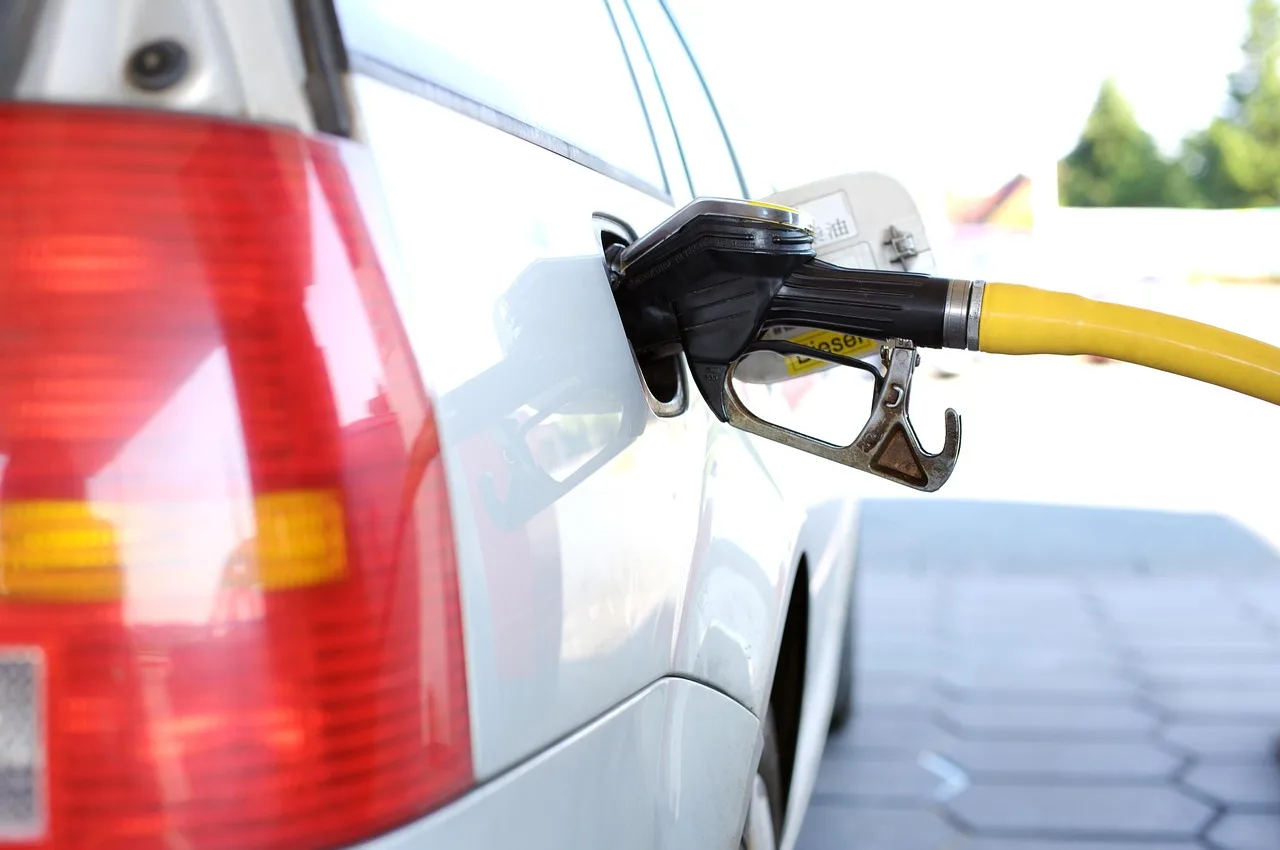
At a U.S. pump, the grades mainly describe octane, shown as AKI. Regular gasoline is 87 AKI and fits most cars, crossovers, minivans, and light trucks built for standard fuel. Mid-grade gasoline is rated between 89 and 90 octane. Premium gasoline is 91 octane or higher, with station and regional labeling often putting premium at 91 or 93.
Regular is the base grade
Regular gasoline contains 87 octane and is the default fuel for a large share of passenger cars, crossovers, and light trucks. Many naturally aspirated family vehicles are tuned around 87 AKI from the factory. For those vehicles, regular is the right fuel, not a fallback.
That matters because octane is not a “better fuel” ladder. It is a knock-resistance scale. If the engine calibration is built for 87 AKI, moving up a grade usually adds cost without adding a useful change in power, economy, or durability.
Mid-grade is a narrow middle option
Mid-grade sits between regular and premium at 89 to 90 octane. It is often blended at the pump from the station’s regular and premium tanks, though exact setup varies by retailer. Mid-grade can help vehicles that show knocking with regular fuel, but it is not a blanket upgrade.
Its best use is situational: a vehicle that does not require premium, but shows light knock under heavier load or in hotter weather, may respond to mid-grade without the full price jump to premium.
Premium is for engines that need more knock resistance
Premium starts at 91 octane and can be 93 in many eastern markets, while 91 is common in many western states. Premium is meant for engines with higher cylinder pressures and temperatures, including many turbocharged engines, high-compression designs, and some luxury or performance models that specify 91+ AKI. That includes many turbocharged engines, high-compression engines, and some luxury or performance models.
Premium does not contain more energy simply because the octane number is higher. The grade tells you how well the fuel resists abnormal combustion under pressure and heat.
Why octane matters
Octane measures knock resistance, not power by itself
Higher octane helps with knock resistance. It does not mean the fuel contains more usable energy per gallon. That is the point many drivers miss when they assume premium must make every car stronger or more efficient.
Putting 91 or 93 AKI into an engine designed to run on 87 does not by itself create more horsepower or better mpg. If the engine timing, boost, and compression are already matched to regular, the extra knock resistance has nothing to act on.
Knock starts when pressure and heat get ahead of the burn
Engine knock, also called detonation or pinging, is uncontrolled combustion after the spark event begins. In plain terms, the air-fuel mixture starts burning in a way the engine does not want. Drivers may hear a metallic ping under load, but modern engines can also pull timing before any sound is obvious.
Knock risk rises with higher compression, turbocharging or supercharging, more aggressive ignition timing, hot ambient conditions, steep grades, heavy cargo, and towing. Those conditions increase cylinder pressure and temperature. Higher-octane fuel resists self-igniting under that stress.
Suppose a small turbo crossover is filled with regular on a 100-degree day, then asked to climb a long interstate grade with four passengers and luggage. Fuel that seemed fine in flat commuting can become marginal in that one heavier-load situation.
How octane is tested, and why U.S. numbers look lower
U.S. pumps display AKI, short for Anti-Knock Index. AKI is the average of two laboratory test methods, Research Octane Number and Motor Octane Number, often written as (R+M)/2. Other markets often advertise only RON. Because AKI averages RON with the tougher MON result, the U.S. number looks lower for the same fuel.
That is why foreign manuals, reviews, and forum posts can confuse U.S. drivers. A fuel described abroad with a higher RON figure may correspond to a lower-looking AKI number here. The key is to compare the same standard, not the raw numbers alone.
How to confirm the right octane for your car
The safest rule is simple: use the octane grade your car’s manual or fuel-filler label calls for, and don’t assume higher octane is better. The supporting guide on fuel grade choice explains how to check those two sources, interpret regular versus premium recommendations, and spot the few cases where mid-grade may be appropriate. That matters because the wrong grade can cause knock, reduce performance, and increase fuel costs without giving you any benefit.
If you are unsure after checking the manual and fuel door, the article also covers common mistakes and quick ways to verify what your engine actually needs before you fill up.
Which cars actually need premium?
Cars need premium only when the manufacturer says it is required or when the engine design clearly expects higher knock resistance. The key split is “premium required” versus “premium recommended.” Required means the engine is built to have that minimum octane available. Recommended means the engine usually has some flexibility, though performance or economy may drop on lower grades.
What “premium required” means
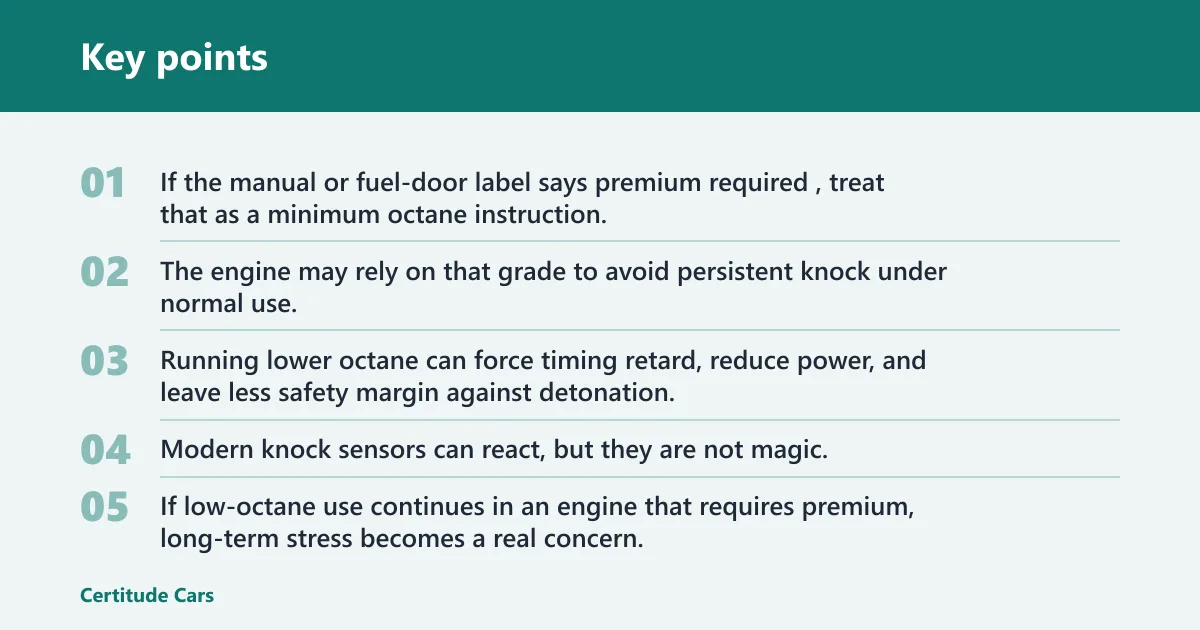
If the manual or fuel-door label says premium required, treat that as a minimum octane instruction. The engine may rely on that grade to avoid persistent knock under normal use. Running lower octane can force timing retard, reduce power, and leave less safety margin against detonation.
Modern knock sensors can react, but they are not magic. They can trim timing and sometimes boost to protect the engine, yet severe or sustained knock is still a bad operating condition. If low-octane use continues in an engine that requires premium, long-term stress becomes a real concern.
What “premium recommended” means
Recommended is different. It usually means the engine is calibrated to make its best advertised output, and sometimes its best fuel economy, on premium, but can operate on lower grades. In that case, regular or mid-grade may be acceptable, especially in easier conditions.
The tradeoff is situational. Under light commuting, the difference may be hard to notice. Under heat, load, boost, or sustained acceleration, the engine may pull timing sooner on regular. That can mean softer throttle response, less passing power, or slightly lower efficiency.
Say your owner’s manual lists premium recommended for a turbo sedan, and most of its life is spent in mild-weather suburban driving. Running 87 AKI may be acceptable. The same car on a summer road trip through mountain grades may benefit from stepping up a grade or two.
Engine types that often ask for more octane
Many naturally aspirated family cars are built for 87 AKI. Engines more likely to call for premium include high-compression naturally aspirated engines, many turbocharged engines tuned for output, and performance-oriented models where ignition timing and boost targets are set around higher knock resistance.
The only safe shortcut is the vehicle’s own documentation. A broad engine category can hint at likely octane needs, but it does not replace the manual or fuel-door label.
Can you use regular in a premium car?
If the vehicle says premium is required, regular is the wrong choice except in a true emergency and only for the shortest practical distance. If premium is recommended, regular may be acceptable, but expect some conditions to expose the compromise. The manual’s wording matters more than internet generalities about “modern engines adjusting.”
When premium is required
For a required-premium vehicle, regular can trigger protective responses quickly. The engine control system may retard timing, limit boost, and cut available power. That keeps combustion under control, but the car no longer performs as intended and may still be closer to knock in heat or under heavy load.
If regular is all that is available temporarily, drive gently, avoid towing, avoid full-throttle acceleration, and refill with the specified grade as soon as practical. That is a damage-limiting approach, not a normal fueling strategy.
When premium is recommended
For a recommended-premium vehicle, regular often works, but the result depends on conditions. A cool-weather commuter cycle may hide most of the difference. Hard acceleration, steep climbs, or high ambient temperatures may reveal it.
Mid-grade can be a sensible short-term compromise here. It is also reasonable when a driver hears recurring light knock on regular during a narrow set of conditions, such as merging uphill with a loaded vehicle, but the manual does not require premium.
What knock sensors can and cannot fix
Knock sensors help the engine react to borderline octane. They do not let the engine ignore the manufacturer’s fuel requirement. They reduce spark advance and, on some engines, lower boost or alter fuel and load targets to protect hardware.
That protection has a cost. Less timing and less boost usually mean less power, and sometimes less efficiency. Sensors are a safety system, not a reason to underfuel a premium-required engine on purpose.
When does mid-grade make sense?
Mid-grade makes sense when regular is acceptable on paper but marginal in real use. The common cases are recurring light knock under load, towing, steep grades, hot weather, or a premium-recommended vehicle where regular feels too close to the edge. It is usually a situational choice, not the default long-term answer for every car.
Light knock under load
Mid-grade gasoline is rated between 89 and 90 octane, and that small octane bump can be enough to quiet light pinging in engines designed for regular but stressed by age, carbon deposits, or occasional heavier loads. Moving from 87 AKI to 89-90 AKI is often enough to stop mild knock that appears only during uphill acceleration or a loaded merge.
If the knock is frequent, loud, or happens in normal easy driving, fuel grade may not be the whole problem. Carbon buildup, incorrect spark plugs, overheating, or sensor issues can also contribute.
Towing, hot weather, and mountain driving
Towing, sustained uphill grades, and high ambient temperatures all increase knock demand. So does heavy throttle at low engine speed. In a regular-fuel vehicle that only pings during those events, moving from 87 AKI to 89-90 can be a practical test before paying for 91-plus every fill-up.
Picture a midsize pickup that runs quietly on 87 AKI all winter but pings lightly only when towing a small camper in August. That is the sort of narrow operating window where mid-grade can make sense.
Temporary compromise versus long-term habit
Mid-grade is also a reasonable temporary choice when premium is recommended but not required and premium is unavailable or sharply more expensive. What it should not become is a reflex purchase with no benefit. If the vehicle is perfectly happy on regular in your conditions, mid-grade is extra cost without a clear return.
Fuel grade decision table
| Vehicle requirement | Symptoms or driving conditions | Best fuel grade |
|---|---|---|
| Regular recommended | Normal commuting, no knock, manual allows 87 AKI | Regular 87 AKI |
| Premium required | Manual or fuel door states premium required; any weather or load | Premium 91+ AKI |
| Regular acceptable | Light knock under load, such as uphill acceleration or a loaded merge | Try mid-grade 89-90 AKI; if knock continues, move to premium and inspect for mechanical causes |
| Regular or premium recommended | Towing, steep grades, mountain driving, or very hot weather | Consider mid-grade or premium depending on severity and manual wording |
| Premium recommended, not required | Temporary compromise when premium is unavailable or the price gap is hard to justify | Mid-grade 89-90 AKI if available; regular may still be acceptable if the manual permits it |
Ignore premium marketing when the manual calls for regular, the engine shows no knock, and the car is not losing performance in the conditions you actually drive. Use the lowest grade that meets the manufacturer requirement and fits the vehicle’s real operating load.
Does premium improve fuel economy enough to pay for itself?
In cars designed for regular, premium usually does not improve fuel economy or performance enough to cover the higher price. In cars tuned to use higher octane, the answer can vary with conditions, but any gain has to be weighed against the pump-price spread. The manual’s required-versus-recommended wording is still the starting point.
Cars designed for regular
An engine calibrated for 87 AKI does not gain mpg or power just because the tank contains 91 or 93 AKI. That makes the cost math simple in most regular-fuel cars: higher octane is extra expense with no expected payback.
If regular is accepted and the engine is not knocking, premium is generally money left at the pump. That remains true even if the premium nozzle carries marketing language about cleaning or power; octane and detergent package are separate issues.
Cars that can exploit higher octane
Some engines can advance timing or hold boost better on higher octane, especially when premium is recommended. In those engines, premium may recover some efficiency or performance under heavier load. But that does not guarantee the price gap closes.
A simple calculation helps. If premium costs enough more per gallon that a small, inconsistent fuel-economy gain cannot offset it, the cheaper grade still wins on cost. Unless the vehicle requires premium, the best answer is often to buy the lower acceptable grade and move up only when conditions show a clear need.
How to choose the right fuel grade
- Read the exact wording. Check the owner’s manual and the fuel-door label for words like required, recommended, or an explicit minimum AKI. That one word changes the decision more than any general advice about engine type.
- Match the U.S. pump label. Compare the vehicle’s requirement with AKI on the pump, not foreign RON figures from forums or imported manuals. U.S. grades are typically 87 AKI for regular, 89-90 for mid-grade, and 91-93 for premium depending on region.
- Judge your real driving load. Think about heat, towing, long grades, altitude changes, passengers, cargo, and hard acceleration. An engine that is fine on regular in easy commuting may want more octane during those narrower, harsher conditions.
- Listen for borderline symptoms. Light pinging under load is a fuel-grade clue, especially if it appears only with heat or weight. Persistent knock, roughness, or warning lights should push the decision beyond octane and toward inspection.
- Use mid-grade selectively. If regular is allowed but marginal, try 89-90 AKI in the specific conditions that trigger knock. If nothing changes, do not keep buying the middle grade out of habit.
- Track cost honestly. Compare the per-gallon price gap with any clear, repeatable improvement in how the vehicle behaves. If the manual allows regular and the car runs the same for your use, staying with regular is the cleaner decision.
Fuel quality details that people mix up
Octane versus ethanol content
E10 is common in the U.S., but ethanol content and octane grade are separate labels. A fuel can be regular or premium and still contain ethanol, depending on the station and local market. Do not assume premium means ethanol-free, or that ethanol content alone tells you the octane.
For most drivers, the right move is to follow the vehicle’s approved fuel guidance first, then read the pump labels carefully. If a small engine, collector vehicle, or specific manufacturer guidance calls for a certain ethanol limit, that is a different decision from octane choice.
Top Tier detergent standards versus octane grade
Top Tier detergent standards address deposit-control additives, not octane. A Top Tier regular fuel can be a better fit than a non-Top Tier premium if your car only requires regular. Octane handles knock resistance; detergent standards address intake-valve and fuel-system cleanliness.
That distinction matters because drivers often bundle “premium” and “higher quality” into one idea. They are different labels with different purposes.
Station and regional labeling variations
Pump labels vary by station and by region. Premium may be 91 in one area and 93 in another. Mid-grade may be 89 or 90. Some higher-altitude markets can also show different regular offerings. Read the posted AKI number rather than relying on color, nozzle position, or local habit.
Where fleet fueling and bulk buying fit
Consistency matters across many vehicles
For mixed fleets, fuel-grade mistakes scale fast. One premium-required vehicle accidentally filled with regular may lose power or set off knock-control strategies, while a set of regular-fuel vehicles routinely filled with premium wastes budget across every tank. Consistency and misfueling control matter more when many drivers share many vehicles.
When on-site gasoline purchasing makes sense
Bulk buying gasoline typically reduces per-gallon costs. On-site fueling can eliminate time and labor costs from gas-station trips. For a business with enough vehicles and predictable gasoline use, those two factors can matter as much as the raw posted street price.
Consumer drivers do not need to build their fueling around fleet economics, but the lesson still applies: pick the right grade first, then manage purchase cost. Grade choice and buying method are separate decisions.
Frequently asked questions
What octane is regular gas in the US?
Regular gasoline contains 87 octane on the U.S. AKI pump label. It fits most standard vehicles, and many manufacturers tune engines to run efficiently on 87 AKI. If the manual allows 87 AKI, moving to a higher grade usually adds cost without adding a useful benefit.
What octane is mid-grade gas?
Mid-grade gasoline is rated between 89 and 90 octane. It sits between regular and premium and is best treated as a situational option, not a mandatory upgrade path. Its most practical use is when regular is allowed but borderline under heat, load, or occasional light knock.
What octane is premium gas?
Premium gasoline is 91 octane or higher. In many western states, premium is commonly 91 AKI, while many eastern markets commonly sell 93 AKI. The exact number matters less than meeting the vehicle’s stated minimum, especially when the manual says premium is required.
Does premium gas improve fuel economy in cars that don’t require it?
Usually no. Putting premium in an engine calibrated for regular does not usually increase fuel economy or performance. Unless the engine can change timing, boost, or compression usefully enough to exploit the extra knock resistance, the higher pump price generally does not pay back through mileage or power.
Can I use regular gas in a premium-recommended vehicle?
Usually yes, if the manual says premium is recommended rather than required. The engine may run acceptably on regular, but with less performance or economy in some conditions, especially heat, towing, or sustained load. Mid-grade can be a reasonable temporary compromise if regular feels marginal.
How do I choose the right fuel grade for my vehicle?
Start with the owner’s manual and fuel-door label, then match that wording to the AKI number on the pump. Use the lowest grade the manufacturer says is acceptable, and only move higher if the vehicle requires it or real conditions, such as light knock under load, justify the change.