What Fuel Grade Should I Use in My Car?
Use the octane grade your owner’s manual or fuel-filler label specifies, and pick the lowest grade approved for your engine. Wrong fuel can trigger knock, cut performance, raise running costs, or add wear over time. This guide shows how to read the manual, check the fuel door label, and tell whether your car needs regular, premium, or a higher-spec petrol.
Fuel grade basics
In the U.S., the common choices are regular unleaded, mid-grade gasoline, and premium gasoline. Regular is usually around 87 octane, mid-grade is usually around 89, and premium is usually 91-93. Most cars are built for regular unleaded, so higher octane is not automatically better.
Octane rating measures resistance to knock or ping. It does not mean “better fuel” in a general sense. High-octane fuel helps only when the engine was designed to need it; it does not make every engine stronger.
What type gas should I put in my car?
Start with the owner’s manual, then check the fuel-filler label. If the manual says regular only, use regular unleaded. If the manual says premium is required, use premium. If it says premium recommended, regular may be allowed, but the manual’s wording tells you how much room you have.
What you’ll need
- The owner’s manual for your exact model year and engine
- The fuel-filler door label, if present
- Your vehicle year, trim, and engine code if you need to look up the listing
- Access to the manufacturer’s fuel specification page if the manual is missing
What does your owner’s manual say?
The owner’s manual is the main source for the manufacturer-recommended fuel grade. Read the fuel section before you trust a guess, a label alone, or a general rule about luxury brands. The manual may specify regular, mid-grade, or premium, and that wording should beat generic advice.
Find the fuel recommendation section
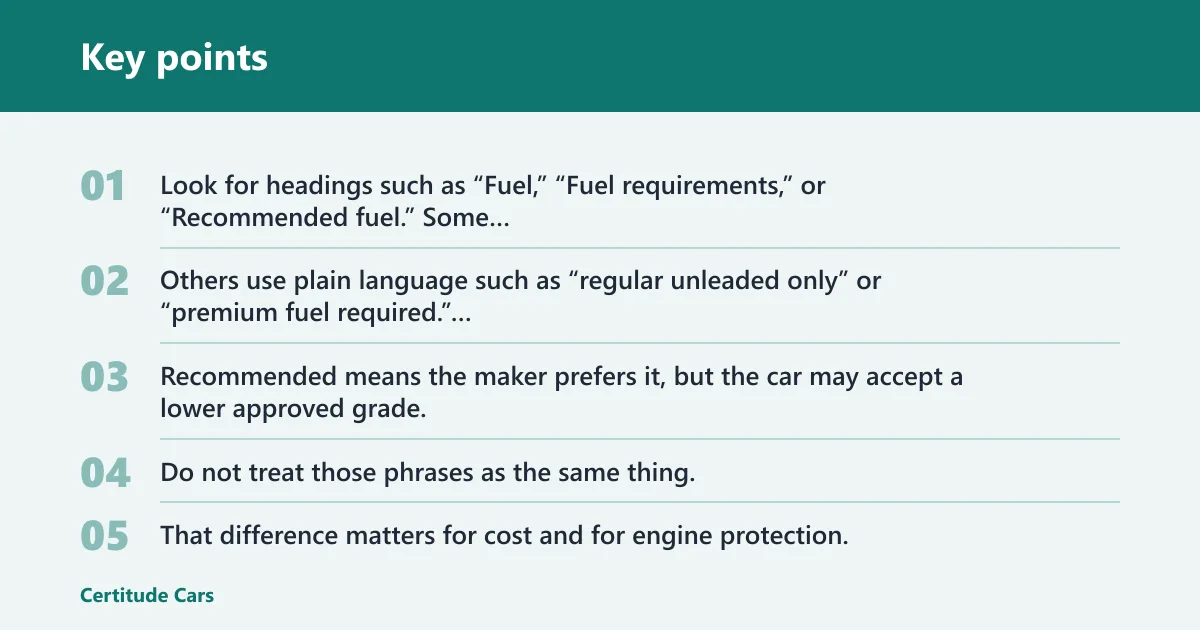
Look for headings such as “Fuel,” “Fuel requirements,” or “Recommended fuel.” Some manuals state the octane number directly. Others use plain language such as “regular unleaded only” or “premium fuel required.”
Read required versus recommended wording
Required means the engine is designed for that grade. Recommended means the maker prefers it, but the car may accept a lower approved grade. Do not treat those phrases as the same thing. That difference matters for cost and for engine protection.
Treat the manual as the final word
If the manual and the fuel door label disagree, use the manufacturer’s written fuel spec for your exact vehicle. If the manual is missing, use the VIN-based listing or a dealer parts catalog for your model year and engine code before filling up.
What is on your fuel door label?
The fuel door label is a quick check, not a replacement for the manual. It usually repeats the grade the vehicle is meant to use and can help when you are standing at the pump. If the label is clear and matches the manual, follow it.
Match the label to the manual
Look for the octane number or wording such as “unleaded gasoline only” or “premium fuel only.” A label that says premium only is not a suggestion. A label that says regular unleaded gives you a fast confirmation that you do not need to pay for premium.
What to do if the label is missing or unclear
Do not guess from badge trim, engine size, or the fact that the car feels refined. Use the manual, then the VIN-specific listing, then the dealer or manufacturer fuel specification. If you still cannot verify the grade, do not fuel the car until you have a clear answer.
- Open the fuel section in the owner’s manual and note the exact grade language.
- Check the fuel door label and confirm whether it repeats the same grade.
- If the manual is missing, look up the fuel spec by model year, trim, and engine code.
- If the listing is still unclear, contact the manufacturer or a dealer parts department before filling the tank.
Fuel decision matrix
Which fuel should I use?
| Manual says | Fuel door label | Engine type clues | Correct action |
|---|---|---|---|
| Required | Premium fuel only or premium grade listed | High-compression engine, turbo, or performance trim | Use the specified premium grade. What to do next: buy the grade named in the manual, then keep the receipt if you need to compare fill-up cost. |
| Recommended | Regular or premium listed | Turbocharged or performance-oriented engine may be present | Use the lowest approved grade if the manual allows it, or premium if the manual says it is recommended for best output. What to do next: decide whether the performance or towing use justifies the extra cost. |
| Regular only | Regular unleaded listed | Typical naturally aspirated engine | Use regular unleaded. What to do next: stop paying for higher octane unless the manual for your exact model says otherwise. |
| Unknown | Missing, unreadable, or absent | No reliable clue from badges alone | Do not guess. Confirm the grade in the manual or the manufacturer listing before fueling. What to do next: identify the exact model year and engine code, then verify the spec. |
What car uses mid grade fuel?
Mid-grade gasoline is usually around 89 octane and sits between regular and premium. It is less common as a strict requirement than regular or premium. Some vehicles can use it, but the only safe rule is the one in the owner’s manual. If the manual does not call for mid-grade, it is usually an optional choice, not a need.
Can you put different grades of gas in your car?
Only within the range the manual allows. If the manual says premium required, do not drop to a lower grade. If it says regular unleaded, switching to premium usually adds cost without a guaranteed benefit. Mixing grades at the pump may still land on an approved octane, but the target is the manufacturer’s spec, not a random blend.
When premium is worth paying
Premium is justified when the manual says required, and it can be worth trying when the manual says recommended and the vehicle spends time under heavier load. That includes towing, steep climbs, hot weather, or sustained high-speed driving in a turbo or high-compression engine. Use the grade the manual calls for under those conditions.
Say your coupe has a turbo engine and the manual says premium recommended. A steady commute may be fine on the lowest approved grade, but a week of towing or mountain driving can make the premium recommendation more relevant.
When extra octane is wasted money
If the manual says regular only, premium does not automatically give more power or better mileage. Fuel economy can change slightly by fuel grade, but octane alone does not guarantee a visible gain. Most cars can adjust within their design range, so paying more is often a cost with no return.
Most people choose the lowest octane level fuel available because it is cheapest. That makes sense only when the manual allows it.
Do I need premium gas in my car?
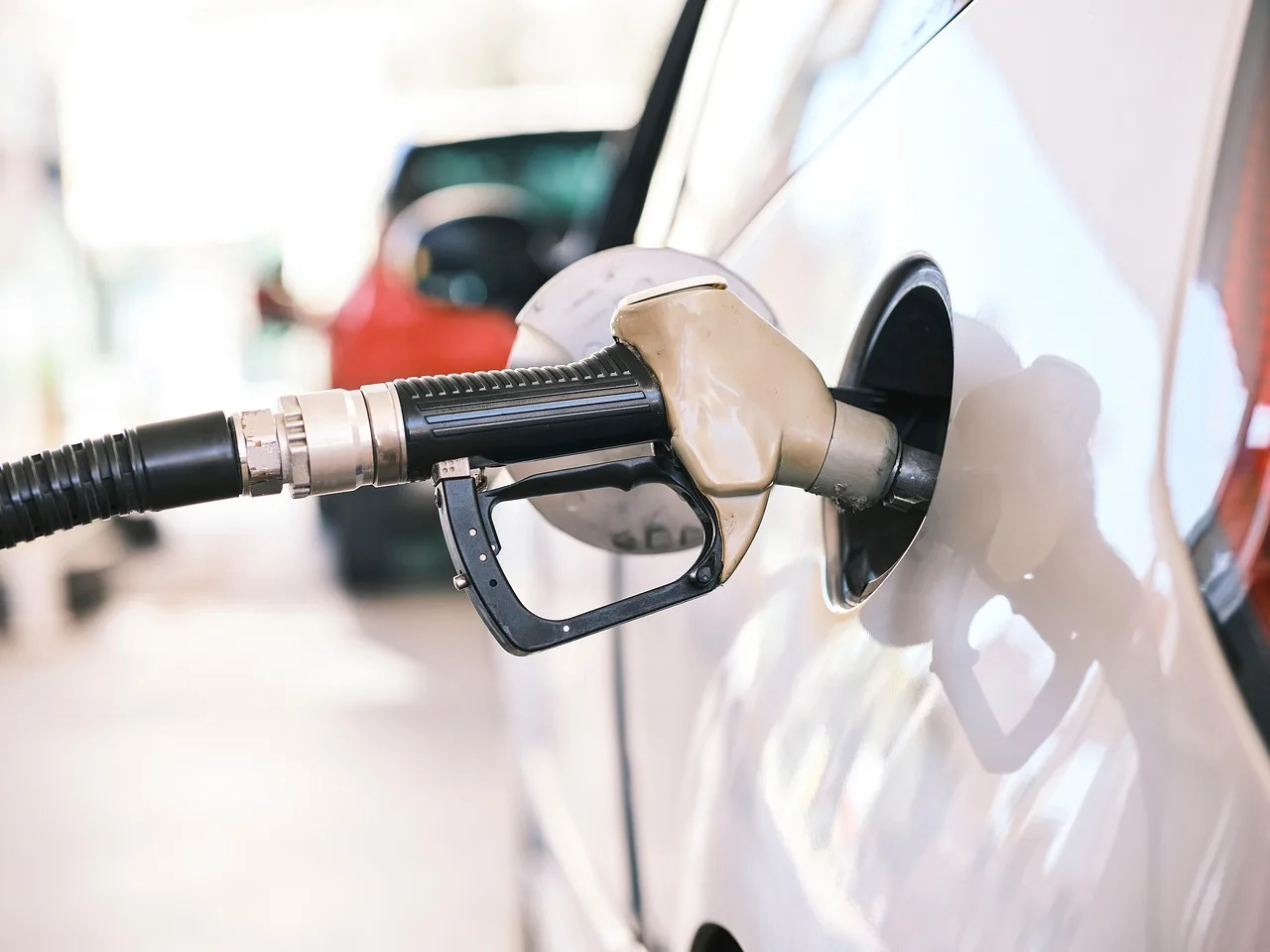
You need premium only if the manual says premium required or the fuel door label says premium fuel only. Premium fuel is usually 91-93 octane in the U.S., and some high-compression engines need it. A turbo or performance trim may also need it, but engine design decides that, not brand image or trim level alone.
Engine knock and other warning signs
Engine knock is a pinging or ringing sound that can point to the wrong fuel grade or pre-ignition. Using the wrong fuel grade can cause knocking noise. That said, knocking does not prove fuel is the only problem; it can also come from unrelated engine faults, so do not treat it as a fuel-grade diagnosis by itself.
How to separate fuel choice from a drivability problem
If the car runs poorly, look beyond octane. Misfires, dirty sensors, ignition faults, vacuum leaks, and bad fuel can all cause rough running. If the manual calls for regular and the car still knocks, hesitates, or loses power, contact a mechanic instead of assuming premium will cure it.
- Confirm the required octane in the owner’s manual.
- Check the fuel door label for a matching grade.
- If the car still pings or runs rough, have the engine checked for non-fuel causes.
Common mistakes
One common mistake is buying premium because the car is a luxury model. Another is assuming a turbo always needs premium even when the manual allows regular. A third is treating pinging as proof that the car simply wants higher octane. Those shortcuts can waste money or hide a real fault.
- Assuming luxury means premium: some Lexus models, including some ES 350 years, are not premium-required, so verify the exact manual.
- Choosing by price: the cheapest fuel is not always right, and the most expensive fuel is not always better.
- Using octane to solve everything: if the engine misfires or hesitates, fuel grade may not be the cause.
- Ignoring the manual wording: “recommended” and “required” are not interchangeable.
Suppose a sedan with a 2.0-liter turbo starts pinging during a long uphill pull after being filled with regular. The next step is not to assume every problem is octane-related; check for a manual requirement, then inspect for other engine faults if the sound continues.
Prevention: keep a photo of the fuel page in the owner’s manual on your phone, and note the grade on a label inside the fuel door so you do not have to guess at the pump.
Frequently asked questions
What type fuel should I use in my car?
Use the grade named in the owner’s manual, then confirm it on the fuel door label. If the manual says regular only, regular unleaded is the right pick. If it says premium required, use premium and do not downgrade to save money on that fill.
Which fuel grade should I use for my car?
The answer depends on the exact model year, trim, and engine. The safest rule is simple: follow the manufacturer’s fuel spec for your VIN-specific vehicle, not a generic rule for the badge. If the manual is missing, confirm the listing before filling the tank.
What fuel grade should I use?
Use the lowest octane grade that the manual approves for your engine. That keeps you from paying for octane you do not need and avoids underfueling a car that does need premium. If the car feels wrong after refueling, do not assume grade alone is the cause.
What does my owner’s manual say about fuel grade?
It should state whether the engine needs regular, mid-grade, or premium, and it may use terms such as required or recommended. Read that wording carefully. If the page is unclear, use the fuel section in the manual index or the manufacturer’s online listing for your exact vehicle.