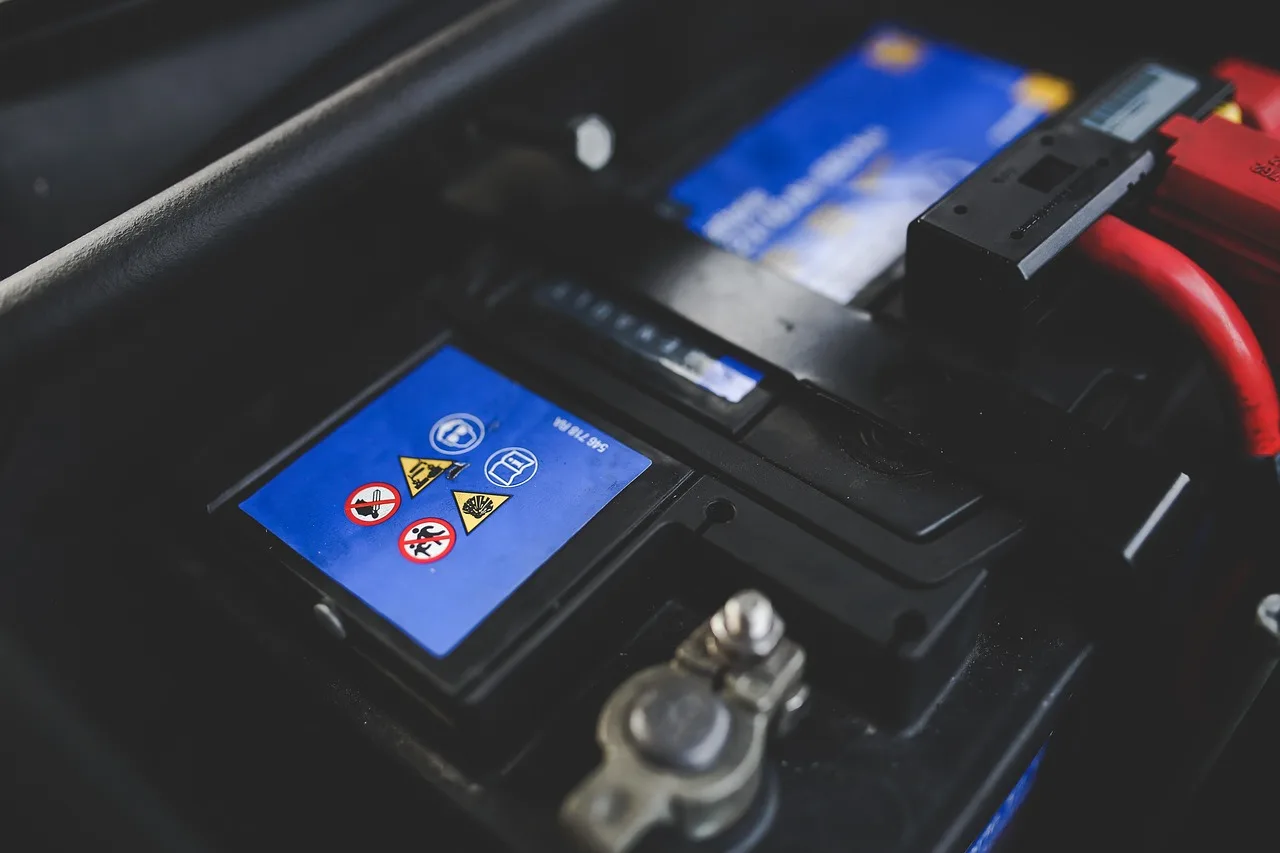
Battery Light on in a Used Car: Red Flag or Easy Fix?
A battery light with the engine running is a red flag, but not always a deal-breaker: if charging voltage is 13.5–14.7V and the cause is a belt, terminals, or an old battery, it can be a low-cost fix; if it stays on after a jump or voltage is low, treat it as a walk-away risk. Ignore it and you can buy a car that dies on the test drive or leaves you with a failed alternator, tow bill, and a dead battery. This guide shows how to tell a cheap repair from a serious fault, what to check before you buy, and how to use the warning light in negotiation.
Battery light used-car decision guide
Use the warning light as a decision signal, not a guess. If the car starts but the charging system has not been verified with a voltmeter and scan tool, you do not know whether you are looking at a $20 terminal clean-up or an alternator, regulator, or wiring fault that can return after the sale.
For a buyer, the key question is simple: does the issue stay within a repair budget you can justify against the asking price, or does it point to a fault that can strand the car? A short test drive is not enough.
Battery light decision matrix
| Symptom observed | Likely cause | Quick on-site test | Buy / negotiate / walk-away recommendation |
|---|---|---|---|
| Light comes on only at idle with dim lights | Alternator output weak at low rpm, loose belt, or slipping tensioner | Check charging voltage at idle and at 2,000 rpm; look for 13.5–14.7V running | Negotiate if voltage is only slightly low and repair estimate is small; walk away if voltage stays below 13.5V |
| Light stays on after startup, but battery is new | Alternator, voltage regulator, wiring, or ground fault | Inspect belt, then scan for charging or low-voltage codes; retest voltage with electrical load on | Usually negotiate only if the fault is proven minor; otherwise walk away |
| Light appears after a jump start | Weak battery, poor connection, or charging system not recovering | Measure resting voltage after the engine sits; look for about 12.6V for a fully charged 12-volt battery | Negotiate if the battery alone is tired and the system charges normally; walk away if charging stays abnormal |
| Light flickers over bumps or when accessories turn on | Loose terminals, bad ground, wiring issue, or failing regulator | Wiggle-test visible connections with the engine off, then retest with headlights and blower on | Walk away unless a written diagnosis shows a simple, low-cost fix |
| Seller recently replaced the battery, but no invoice is available | Hidden charging fault may have cooked the old battery | Ask for invoice and charging-voltage reading; scan for stored codes | Negotiate only with proof of repair; otherwise treat as a risk signal |
Use price as part of the decision. A charging-system repair that costs a few hundred dollars is easier to absorb on a cheap commuter than on a car already priced near market average. If the repair estimate is more than about 10% of the asking price, or the seller cannot document the fault, the deal becomes weaker fast.
Seller risk signals matter as much as the light itself. A jump-started viewing, cleared codes, a battery replaced “last month” without an invoice, or a light that appears only after the engine warms up all deserve caution.
Buying used car checklist
- When did the battery light first appear?
- Does it stay on, flicker, or come and go with rpm?
- Has the battery, alternator, belt, or regulator been replaced recently?
- Is there a diagnostic report with voltage readings?
- Were any codes cleared before the viewing?
- Was the car jump-started to bring it to the sale?
- Can the seller show repair invoices for charging-system work?
What does the battery light mean?
The battery warning light usually points to the charging system, not only the battery itself. It can mean the alternator is not supplying enough current, the belt is slipping, a terminal is loose, a ground is poor, a fuse is open, or the voltage regulator is out of range.
That is why the light can appear while driving or stay on after startup. The engine may keep running for a short time because the battery is carrying the electrical load, but that does not mean the system is healthy or that the car is safe to buy.
Why the light can come and go
An intermittent warning is a common trap. A failing alternator may charge normally at one moment and drop output when hot, under load, or at idle. A loose belt or corroded terminal can do the same.
That kind of fault is harder to catch on a short test drive, which is why you need voltage readings and a scan for stored codes, not just a glance at the dash.
Is it a red flag or a cheap fix?
It is a red flag first, because it can hide a charging fault that turns into a stall or no-start after purchase. It is only a cheap fix when testing shows a healthy charging system and the issue is limited to an old battery, a cleanable terminal problem, or a belt that needs service.
The dividing line is evidence. If the car charges at about 13.7 to 14.7 volts with accessories on, and the seller can prove a simple issue, you may be dealing with a negotiable repair. If charging voltage is weak, unstable, or too high, the risk rises quickly.
When the fault is likely minor
A battery with about 12.6 volts at rest and a running voltage in the normal range often points away from a dead alternator. In that case, a weak battery, surface corrosion, or a loose clamp may be the issue, and the cost may stay modest.
Picture a 10-year-old sedan that starts on the first turn, but the light is on and the battery terminals have white corrosion. If cleaning the terminals and replacing an old battery are enough to restore normal charging, that can be a bargain if the price already reflects the fault.
When the fault points to a walk-away risk
If the light stays on after a jump, charging voltage sits below about 13.5 volts, or it climbs above about 15.0 volts, stop treating it as routine. Those readings suggest the alternator, regulator, wiring, or grounds may be failing, and that can take out the battery too.
A common first-timer mistake is to assume “it still starts” means it is safe. A car can start at the lot and still die after 20 minutes of headlights, blower, and rear defrost running.
What usually causes the battery light?
The most common cause is alternator trouble. The alternator charges the battery and powers the car while the engine runs, so a weak or intermittent alternator is one of the first things to suspect when the warning light appears.
Other common causes include a weak 12-volt battery, a loose or slipping serpentine belt, corroded terminals, bad wiring, a blown fuse, or a regulator fault. Several of these can be intermittent, which is why a warning light that comes and goes still needs proper testing.
Alternator and regulator faults
An alternator can fail outright or only under load. Some units behave normally at idle, then drop output with headlights, climate control, and rear defrost on. A regulator fault can push voltage too low or too high.
Either condition can set a charging-system code, and some vehicles will also store low-voltage history in a control module even if the dash light is off during the viewing.
Battery, belt, terminals, wiring, and fuse issues
A car battery can be weak, sulphated, or near end of life and still pass a quick start test. That is not enough. It may fail once the car is under electrical load or after sitting overnight.
The serpentine belt also matters. If it is glazed, cracked, loose, or contaminated, the alternator may not spin fast enough. Loose terminals, damaged cables, poor grounds, and fuse problems can all mimic a bigger failure.
How do you check it before buying?
You need three checks: visual inspection, voltage testing, and a scan for stored codes. Together, they help separate a weak battery from a charging fault and show whether the issue is simple enough to negotiate or serious enough to walk away from.
Do the checks on-site before any long drive. If the seller resists basic testing, that is itself a warning sign.
Inspect the belt and terminals. Look for cracks, fraying, glazing, or obvious looseness in the serpentine belt. Check battery terminals for white or green corrosion, loose clamps, or damaged cables, because those problems can interrupt charging even when the car starts normally.
Measure resting voltage. With the engine off and the car sitting long enough to settle, a healthy fully charged 12-volt battery is often about 12.6 volts. Much lower than that can mean a weak battery, a drain, or a battery that is already near the end.
Measure running voltage. Start the engine and check again at idle, then with electrical loads on. Many systems should show around 13.7 to 14.7 volts while running. If charging voltage climbs above about 15.0 volts while running, treat that as a serious fault signal.
Scan for stored codes. Use an OBD-II scan tool to check for charging-system, low-voltage, or regulator-related codes, even if the light is intermittent. A cleared code history, or codes that return after a short drive, can tell you more than the dash light alone.
Suppose a crossover shows 12.5 volts at rest and 14.2 volts running with the headlights and blower on. That points more toward a battery that is aging than a failed alternator, especially if the belt and terminals are clean. If the seller can prove the battery is old and the price reflects that, it may be a negotiate case.
Buying used car decision matrix
Use this table after the quick checks. It gives you a buyer decision, not a general repair guide. If any row points to a walk-away result and the seller cannot produce written proof of a simple fix, stop the deal and request an independent pre-purchase inspection.
| Symptom observed | Likely cause | Quick on-site test | Buy / negotiate / walk-away recommendation |
|---|---|---|---|
| Battery light off at idle, on with headlights and blower | Marginal alternator output | Confirm running voltage under load; compare idle and 2,000 rpm | Negotiate if the fault is documented and costed; walk away if voltage drops below 13.5V |
| Battery light on, belt visibly cracked or loose | Serpentine belt or tensioner problem | Visual inspection and belt tension check | Negotiate if the issue is clearly limited to belt service |
| Battery light on, battery terminals corroded | Poor connection or charging interruption | Inspect clamps, clean residue, then retest voltage | Negotiate if charging normalizes after terminal service; otherwise continue testing |
| Battery light on, voltage below 13.5V while running | Alternator, wiring, ground, or regulator fault | Repeat test with electrical load and scan for codes | Usually walk away unless a written repair invoice proves the issue is fixed |
| Battery light on, voltage above 15.0V | Regulator fault or control issue | Confirm with scan tool and retest at different rpm | Walk away; overcharging can damage electronics and batteries |
What should you ask the seller for?
Ask for written proof, not verbal reassurance. A diagnostic report, charging-voltage reading, and repair invoices let you compare the fault against the asking price and tell whether the seller has actually fixed the problem.
If the seller says the battery was “just replaced,” that alone is not enough. Replacements without receipts can hide an alternator issue that killed the old battery, and a fresh battery can mask the problem for a short time.
Documents and answers to request
- Any diagnostic report with stored codes
- Charging-voltage readings at idle and under load
- Repair invoices for the battery, alternator, belt, or regulator
- The date the battery light first appeared
- Whether the car needed a jump start to reach the sale
- Confirmation that no codes were cleared before the viewing
Compare the repair estimate to the asking price and the car’s value. If a $300 to $800 charging-system repair would make the price sensible, a discount may be worth pursuing. If the fault is vague, the estimate is open-ended, or the seller refuses documentation, the safer move is to walk away.
Frequently asked questions
Is a battery light on during a used-car test drive a red flag?
Yes. Treat it as a charging-system warning until testing proves otherwise. The car may still run for a short time, but that does not make it safe to buy. Verify resting voltage, running voltage, belt condition, and stored codes before you agree to anything.
Can a car with the battery light on still be reliable?
Sometimes, but only after you confirm the cause. If the issue is limited to a weak battery, loose terminals, or a belt service, reliability can return. If the alternator, regulator, or wiring is failing, the car may start today and fail later without warning.
What usually causes the battery light to come on?
The usual causes are alternator problems, a weak battery, a slipping serpentine belt, loose terminals, wiring faults, a blown fuse, or a bad voltage regulator. A short drive may not expose the fault, which is why voltage testing and an OBD-II scan matter.
How do I tell if it is just a bad battery or a charging problem?
Check the numbers. A healthy fully charged battery is often about 12.6 volts at rest. With the engine running, many systems should show about 13.7 to 14.7 volts. If running voltage stays below about 13.5 volts or rises above about 15.0 volts, think charging fault.
How much might it cost to fix a battery light issue after purchase?
Cost varies by vehicle and cause. A battery or terminal issue may be relatively modest, while alternator replacement, regulator faults, wiring work, or diagnostic labour can climb quickly. Get a written estimate that separates parts and labour before you decide whether the price still makes sense.
What paperwork or seller answers should I get before agreeing to buy?
Ask for diagnostic results, charging-voltage readings, and repair invoices in writing. Also ask when the light first appeared, whether the car was jump-started, and whether any codes were cleared. If the seller cannot support the story with paperwork, the risk is higher than the price may justify.