Why Does the Oil Light Come on and Off While Driving?
If the red oil light comes on and off while driving, treat it as a real oil pressure warning and pull over as soon as it is safe; do not keep driving until the oil level and pressure are checked. Ignoring it can turn a small fault into bearing damage or a seized engine. This guide explains what the light pattern means, how to separate a sensor fault from actual pressure loss, and what to check first.
What the oil light means
The glowing red oil light means low oil pressure, not a maintenance reminder. It is different from an oil-life monitor, which only tells you when oil change time is near on many newer vehicles. Treat a red warning as urgent.
That warning matters because engine oil does far more than sit in the pan. The oil circuit starts in the oil pan, where the pump sucks up lubricating fluid and sends it through oil passages to crankshaft bearings, camshaft bearings, valve shafts, and other moving parts.
Even a short pressure loss can starve those parts. Aging parts can also widen the tiny gaps between sliding surfaces and let pressure drop a little, which is why a flicker often appears first under certain driving conditions.
Why does the oil light come on and off while driving?
The pattern gives you the first clue. If the light appears at idle, braking, cornering, low rpm, hot engine, or highway speed, each pattern points to a different likely fault. That is the fastest way to separate low oil level, a sensor issue, and real pressure loss.
Light behavior that changes with engine speed is especially useful. If the warning appears at low engine speeds and then shuts off as rpm rises, the oil pump is probably fine. A failing oil pump would usually show low pressure at high engine speeds too.
Driving condition matters because oil moves around in the pan and through the pickup. Low rpm, hard braking, and sharp turns can uncover a weak level or a pickup problem. High speed and a hot engine can expose pressure loss that a cold idle hides.
Oil light troubleshooting matrix
| Driving condition | Likely cause | Urgency | Next test |
|---|---|---|---|
| Idle only | Low idle pressure, worn bearings, or a weak sensor signal | Book a diagnostic soon; stop if the light stays on | Check oil level, then read pressure with a mechanical gauge |
| Braking only | Low oil level or oil slosh in the pan | Pull over if it repeats; do not ignore it | Check the dipstick and look for obvious leaks |
| Cornering only | Low oil level or pickup uncovering during lateral motion | Soon, unless the light stays on | Verify the level and inspect for oil loss |
| Low rpm only | Low idle pressure or sensor fault; pump less likely | Diagnostic soon | Compare idle behavior with a gauge reading |
| Highway only | Real pressure loss, clogged passages, or pump wear | Stop driving and check quickly | Pull over safely and verify pressure before restart |
| Hot engine only | Oil thinning, worn clearances, or pressure loss when hot | High concern | Check level, then test hot oil pressure at idle and cruise rpm |
| Random flicker | Faulty sensor, dirty probe, wiring issue, or intermittent pressure loss | Do not ignore; soon if it clears, stop if it stays on | Inspect the sensor connection and confirm with pressure data |
Say your light flickers only when you stop at a traffic signal after 20 minutes of highway driving. That pattern points more toward low hot-idle pressure than a simple reminder light, so the next step is to check the oil level and then measure actual pressure before replacing parts.
What should you do first?
If the light appears at speed, pull off the road quickly and turn the engine off. Do not try to keep going. Stop as soon as it is practical and leave the engine off until you know whether pressure is actually there.
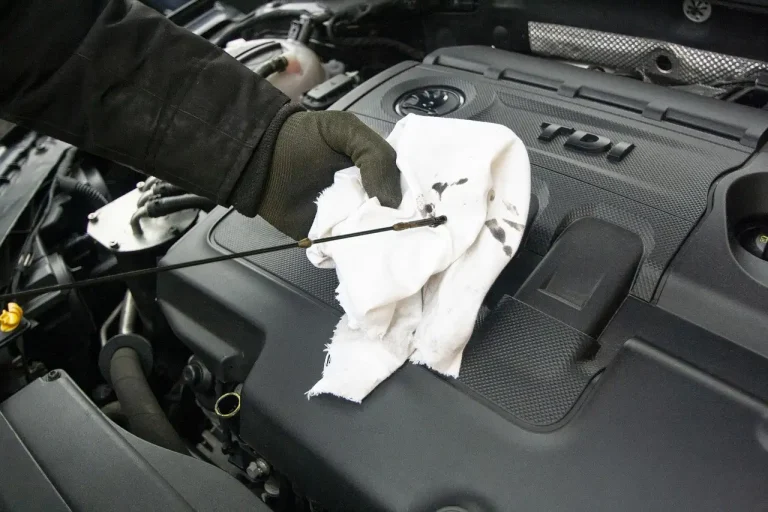
Before deeper diagnosis, double-check the oil level and top it off. A low oil level can mimic pressure problems, especially during braking or cornering. That check is fast, and it can explain a warning that looks more serious than it is.
- Pull over safely if the red oil light appears while driving at speed.
- Shut the engine off.
- Check the dipstick and oil level.
- Top off only if the level is low.
- Restart only if the light went out and the engine is not making new noises.
- Arrange a pressure check if the warning returns or the pattern repeats.
What not to do: do not assume the warning is harmless because it disappears after accelerating. A brief clear light does not prove the engine is safe. It only means the pressure signal changed with rpm or load.
Does a low oil level make the oil light turn on and off?
Yes. A low oil level can make the oil light flicker because the pickup may uncover during braking, cornering, or on a steep grade. It can also let the pump draw air for a moment, which creates a pressure drop that disappears again when the oil sloshes back.
That is why the dipstick comes first. A low level can imitate much bigger faults, and it can happen without any obvious engine noise at first. If topping off brings the level back into range and the light stops, you still need to look for the leak that caused the loss.
Low level is only the first check, though. If the warning returns after the level is corrected, the cause may be a leak, a sensor issue, restricted oil flow, or real internal wear.
Can a bad oil pressure sensor make the oil light flicker?
Yes. The sensor is screwed into the engine and has a probe in an oil passage. It works like an on/off switch using oil pressure to close an electrical circuit. Dirt or foreign matter can foul the sensor probe and cause false warnings.
That kind of fault often looks random. The light may flicker at idle, then vanish with a small rpm rise, or it may come and go with vibration and heat. That said, a sensor can lie in either direction, so you still need a real pressure check before swapping parts.
A sensor fault is more believable when the warning pattern does not match the engine’s behavior. For example, a light that appears only with bumps, wiring movement, or a warm restart can point toward the sensor or its circuit. A pressure gauge settles the question.
Suppose the light comes on only after a stoplight, then turns off the moment you raise engine speed. That pattern can fit a sensor problem, but it also fits true low idle pressure. The difference is why a mechanical gauge or scan data belongs in the diagnosis, not a parts store guess.
When is the oil pump or oil passages the problem?
A failing oil pump can cause real pressure loss, especially if the warning stays or returns at higher engine speeds too. If the light only appears at low rpm and clears with a little throttle, the pump is less likely to be the main issue. If it happens at speed, the concern rises fast.
Blocked or restricted oil passages can also reduce flow to crankshaft bearings and camshaft bearings. Those components depend on a steady oil supply. When the passage is restricted, pressure can look normal in one condition and weak in another, especially when the oil is hot.
Hot-engine flicker is a warning sign because hot oil is thinner. A system that barely holds pressure cold may fall short once the engine is fully warm. That is one reason a warning that shows up only after a long drive should not be dismissed.
Confirm the fault with a mechanical oil pressure gauge or scan data before replacing parts. That step can separate a bad sender from a weak pump, a clogged pickup, or worn internal clearances.
Frequently asked questions
Why does the oil pressure light come on and off at low rpm?
Low rpm can expose weak idle pressure, worn engine clearances, or a sensor that is slow to respond. If the light clears as engine speed rises, the pump is often still moving oil. That pattern still needs a check, because low hot-idle pressure can come from wear or low oil level.
Is it safe to drive if the oil light goes off after accelerating?
No, not as a rule. A warning that disappears with throttle can still mean low pressure at idle, braking, or when the oil is hot. That pattern needs diagnosis soon, and if the light returns at speed, you should stop driving and shut the engine off.
What should I do first when the oil light comes on while driving?
If it happens at speed, pull over quickly and turn the engine off. Then check the oil level before anything deeper. If the level is fine and the light still returns, do not keep driving until the pressure signal is tested with proper equipment.
Can a failing oil pump cause an intermittent oil light?
Yes. A failing pump can create real pressure loss, and the warning may show up more clearly at higher engine speeds or under hot conditions. If the light only appears at low rpm and disappears with throttle, the pump is less likely than a sensor or low level.
Why does the oil light only come on at idle or braking?
Idle and braking change how oil moves through the pan and oil passages. Low oil level, worn bearings, or a weak idle pressure reading can show up there first. If the warning is tied to those moments, start with the dipstick and then move to a pressure test.
How do I tell if it’s the sensor or real low oil pressure?
Start with the pattern. Random flicker can fit a bad sensor; a warning that follows rpm or hot running can fit real pressure loss. Then verify the oil level and measure pressure with a mechanical gauge or scan data. Do not replace the sensor first and hope.