Why Is the Oil Light Flashing?
An oil light that flashes usually means oil pressure is falling. If the red oil pressure light keeps flashing at idle, pull over, switch off the engine, and do not restart it until the cause is clear. Ignoring it can wipe out bearings, score camshafts, and ruin the oil pump in minutes. This guide sorts flashing by color, speed, and whether it appears at idle, braking, or acceleration.
What a flashing oil warning indicates
A flashing oil light usually points to unstable oil pressure, not just low oil level. The red oil can icon means pressure, while an amber oil can with a wavy line usually points to level; both can vary by make and model, so confirm the symbol in the owner’s manual. The key is to treat the red warning as a pressure problem until proved otherwise.
A flashing warning can be serious even if it goes off and on. Pressure that drops in and out can be enough to damage the engine if it continues, and a steady red warning should be treated as an immediate stop signal. In other words, flashing is not a “less serious” version of the same message; it often means the fault is intermittent, which can be harder to catch.
The main parts behind the warning are the oil pressure sending unit, the oil pump, and the oil pickup screen in the sump. The sending unit reports pressure to the dash, the pump creates flow and pressure, and the pickup screen keeps debris out of the system. Many engines also show warning behavior first at idle because oil pressure is lowest there, so a weak pump or worn bearings can reveal themselves before higher rpm does.
If the warning is a flashing check-engine lamp instead of the oil lamp, the concern changes. A flashing engine light can mean active misfires, and that raises catalytic converter risk because unburned fuel can enter the exhaust. That is usually not the same risk pattern as an oil warning, which is about lubrication failure rather than exhaust damage.
Oil light triage table
| Flashing pattern | Likely cause | Immediate risk | Next action | Drive status |
|---|---|---|---|---|
| Flash only at idle | Low oil pressure at low engine speed; worn oil pump, blocked oil pickup screen, or bearing wear | Real pressure loss can start at the weakest point in the rev range | Stop, check oil level if safe, then arrange pressure testing | Do not drive if the red light persists; tow recommended if it returns after restart |
| Flash while braking | Low oil level, overfill, or pickup uncovering as oil sloshes forward | Momentary pickup starvation can turn into repeated pressure loss | Check level, look for overfill or underfill, and inspect service history | Do not drive if the warning is red and repeated; safe to drive to workshop only if it is amber and the handbook allows cautious movement |
| Flash while accelerating | Sender fault, wiring issue, wrong oil grade, filter problem, or deeper wear under load | Pressure may dip as oil thins or the signal drops out | Reduce speed, avoid hard acceleration, and schedule diagnosis soon | Safe to drive to workshop only if the red light does not stay on; otherwise do not drive |
| Flash briefly then clear | Intermittent sender fault, marginal pressure, wrong viscosity, or temporary slosh | False warning is possible, but so is real pressure loss that comes and goes | Check level, filter, and codes; have pressure measured before replacing parts | Safe to drive to workshop for diagnosis if the engine stays normal and the light clears |
| Flash red continuously | Critically low oil pressure, major pump failure, blocked pickup, or severe internal wear | Engine damage can happen quickly | Switch off the engine at once and arrange recovery | Tow recommended |
- Confirm whether the symbol is red or amber.
- Check whether it flashes at idle, braking, turning, or acceleration.
- Verify the oil level before driving again.
- If the red warning returns, shut the engine off and arrange recovery.
Why does it flash at idle?
A flash at idle usually points to marginal pressure at low engine speed. Oil pump wear, a blocked pickup screen, and bearing wear all become more visible when the engine is turning slowly, because the pump is making less pressure and the clearances inside the engine matter more. The warning threshold is more likely to be crossed when idle speed is low, which is why this pattern deserves immediate attention.
When the light clears as rpm rises, that does not make the fault harmless. It can mean the pump still has enough output above idle, while pressure falls below the threshold when the engine slows down. That pattern is one of the clearest clues that this is an oil-pressure problem, not a random dash glitch.
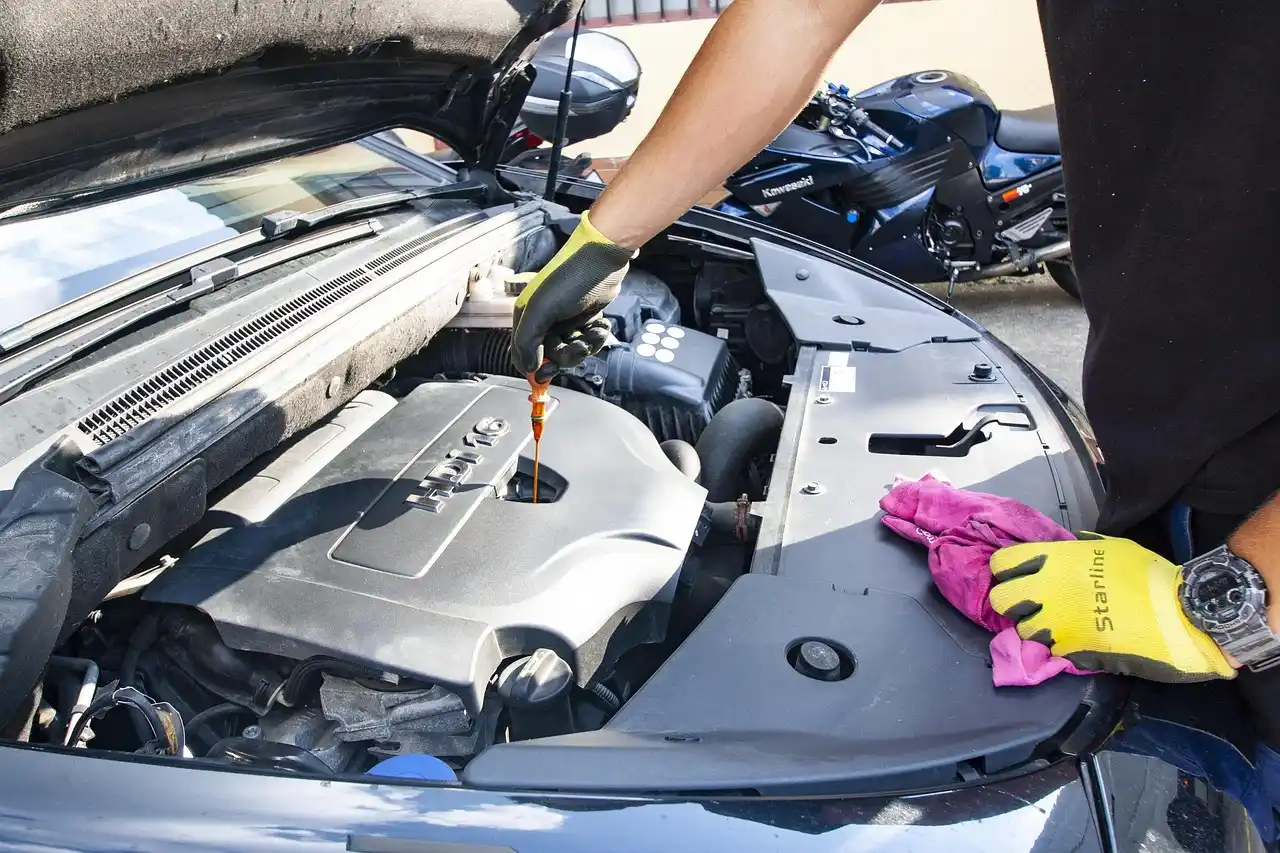
Check the level first. Park on level ground, wait a few minutes after shutdown, and read the dipstick if the engine layout allows it. If the level is below the safe mark, do not keep driving until the leak or loss is found.
Listen for engine changes. A rough idle, ticking top end, or sudden noise makes the warning more urgent. Those signs can point to real pressure loss, not a sender problem.
Arrange pressure testing. A workshop can compare real oil pressure with the dash warning. That separates worn pumps, blocked pickup screens, and engine wear from a bad sending unit.
Say your car flashes the red oil lamp only at a 650 rpm idle after a traffic light, then the lamp goes out when the revs rise to 1,500 rpm. That pattern is more consistent with low idle pressure, a weak pump, or a pickup problem than with a pure level warning.
Why does it flash when braking or turning?
Braking or cornering can move oil away from the pickup. If the level is low, or the sump is overfilled and aerated, the pickup can uncover for a moment and pressure drops with it. That is why a warning can appear on a long stop, a hard turn, or a downhill approach and then clear again once the oil settles.
Recent service history matters here. An overfill, underfill, wrong filter, or incorrect oil grade after an oil change can create the same pattern. If sludge is present, the oil pickup screen can also be partly blocked, which reduces the oil available to pressurize and can mimic pump failure. In these cases, oil level is one of the first checks because slosh-related flashing often starts there, even when the pressure warning is the symptom you see.
Verify the oil level. Check for underfill and overfill. Too little oil can uncover the pickup; too much oil can aerate it and make pressure unstable.
Review the last service. Confirm the oil spec, filter part number, and drain-filling procedure used at the last oil change. A wrong viscosity or filter can change pressure behavior enough to trigger a warning.
Stop if it repeats. A repeated red flash during braking is not a pattern to keep driving with. Arrange inspection or recovery instead of testing it on the road again.
Suppose the oil light flashes only when braking from 30 mph to a stop, then disappears as soon as the car rolls again. That is a classic clue for oil slosh, low level, or a pickup issue, especially if the oil was recently changed.
Why does it flash when accelerating?
Acceleration-related flashing can still be a pressure issue, but the branch changes. A bad oil pressure sending unit can fail intermittently and send an erratic warning during vibration or load. Motor Oil Guide notes that a flashing or intermittent oil pressure light can point to a failing sender, which is why replacement guesses should wait until the signal is checked.
Wrong oil grade, a filter problem, or internal wear can also show up under load. If the warning you are seeing is actually a flashing engine light, the concern is different: that usually points to active misfires, and those misfires can overheat the catalytic converter. That risk generally applies to the flashing engine light, not to the oil light, because the oil warning is about lubrication pressure rather than combustion faults.
- Sender or wiring fault: The warning may flicker as the signal drops in and out.
- Oil spec issue: Oil that is too thin or too thick for the engine can change pressure behavior.
- Filter issue: A restricted or wrong filter can disturb flow after throttle input.
- Deeper wear: If the light appears under load and at idle, suspect broader engine wear or a failing pump.
A common mistake is to assume a brief oil-light flicker during a sharp turn means the engine is ruined. That is too narrow. A sender fault, oil grade error, or filter problem can create the same symptom, so the right move is diagnosis, not parts guessing.
Why does it flash briefly and then clear?
A brief flash can mean intermittent pressure loss, or it can be a false warning from the sending unit. Because the red oil pressure warning can flash intermittently when pressure drops in and out, a light that clears on its own is still a real symptom. Do not assume it is safe just because it stopped.
That is where fault codes, sender testing, and pressure measurement matter. The sending unit is a diagnostic possibility before pump replacement, not an excuse to stop checking. If the engine is otherwise quiet and the warning was brief, a cautious drive to a workshop may be reasonable only when the light is amber, the handbook allows it, and the warning does not return.
Record the pattern. Note speed, rpm, braking, and whether the lamp is red or amber. That detail helps separate level warnings from pressure warnings.
Check service history. Look for recent oil changes, wrong oil spec, overfill, underfill, or a new filter. Those are common real-world triggers for a brief warning.
Plan proper diagnosis. Ask for sender testing and measured oil pressure before authorizing major repairs. That avoids replacing a pump when the fault is electrical or service-related.
How do Volkswagen diesel warning differences work?
Volkswagen diesel warning strategy can be different from a simple gasoline-car oil lamp. A flashing glow plug or oil-related warning can point to an engine-management fault, and not every flashing indicator means the same thing. Handbook-guided diagnosis matters here because the lamp logic can vary by model and engine.
The practical rule is simple: if the handbook says the flashing symbol is an engine-management warning, follow that guidance first. If the red oil pressure icon is flashing, treat it as oil pressure loss until proved otherwise. Because model-specific logic can change warning behavior, the exact symbol and handbook wording matter more than a generic guess.
- Check the exact symbol shape and color.
- Read the handbook for that model and engine.
- Use fault codes to separate oil pressure faults from engine-management faults.
- Do not assume a diesel flash has the same meaning as a gasoline car’s oil lamp.
Frequently asked questions
Why is the oil light flashing on my car?
A flashing oil light usually means the engine is losing oil pressure, or a sensor is reporting unstable pressure. If the icon is red, treat it as urgent. If it is amber and marked with a wavy line, it is more likely an oil level warning, which still needs prompt checking.
Can I drive with a flashing oil light?
Not if the red oil pressure light is flashing. Switch the engine off if the warning stays on or returns repeatedly. An amber oil level warning may allow only very limited driving to a workshop, and only if the handbook permits it and the level is checked first.
Why is the oil light flashing while idling?
Idle-only flashing usually points to low oil pressure at low engine speed. A worn pump, blocked pickup screen, low oil level, or engine bearing wear can all show up first at idle, then seem to improve when rpm rises. That pattern still needs diagnosis.
Why is the oil light flashing when I brake?
Braking can slosh oil away from the pickup, especially if the sump is low, overfilled, or partly blocked by sludge. The warning may clear after the car levels out, but that does not remove the cause. Repeated brake-triggered flashing needs inspection.
Why is the oil light flashing when I accelerate?
Acceleration can expose a sender fault, wiring issue, wrong oil grade, or a filter problem. It can also point to deeper wear if the warning appears under load and at idle. Reduce speed, avoid hard acceleration, and get the system checked soon.
What does it mean when my oil light blinks?
A blinking oil light means the warning is not steady, and that matters. Intermittent flashing can still mean pressure is dropping in and out. Do not downgrade it because it is brief; a short warning can still mark the start of a real oil-pressure problem.