Does the Oil Light Come on When Oil Is Low?
Yes, low oil can trigger an oil warning, but a red oil light means low pressure, not simply low level, so check the dipstick first after the engine has sat a few minutes, and shut the engine off if the light stays on after topping up. Ignoring a true low-pressure light can seize the engine and turn a small leak or failure into a repair bill. This guide shows how to tell low oil level from low oil pressure and what to do in each case.
What the oil light means
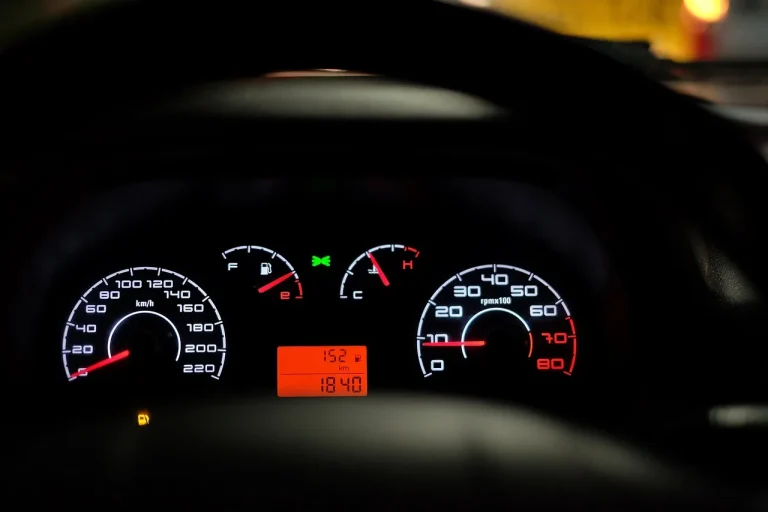
The red oil pressure warning light is a dashboard warning for low oil pressure. It is not the same thing as an oil level warning or an oil-life reminder. Some newer cars use a warning light instead of a gauge, so the lamp matters more than the lack of a needle. A pressure lamp can come on from low level, but it can also come on from sensor trouble, pump wear, pickup blockage, viscosity issues, or bearing wear.
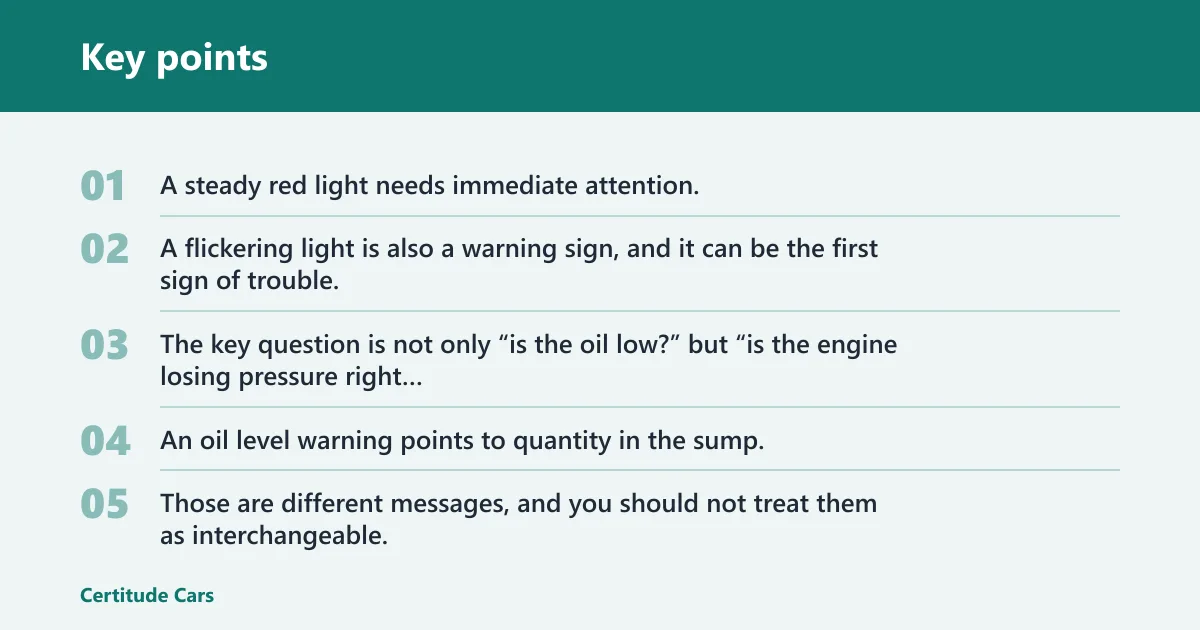
A steady red light needs immediate attention. A flickering light is also a warning sign, and it can be the first sign of trouble. The key question is not only “is the oil low?” but “is the engine losing pressure right now?”
Oil pressure warning light vs oil level warning
An oil pressure warning light points to pressure below a safe level. An oil level warning points to quantity in the sump, and an oil-life reminder points to service timing. Those are different messages, and you should not treat them as interchangeable.
If your vehicle has only a pressure lamp, a full dipstick reading does not prove the warning is false. It only tells you that the sump has oil in it. The system may still be seeing low pressure at the sender.
What the driver can and cannot infer
You can infer that the engine needs attention now. You cannot infer, from the light alone, that the engine is simply “a quart low.” A pressure warning may be the first clue that the pump is starving, the oil is too thin when hot, or the pickup is uncovering during turns.
Does low oil trigger it?
Yes, low oil can trigger the light if the level drops far enough for the pump to suck air instead of oil. That is more likely during hard braking, cornering, or at idle, when oil slosh leaves the pickup partially uncovered. Some vehicles do not warn until pressure has already fallen.
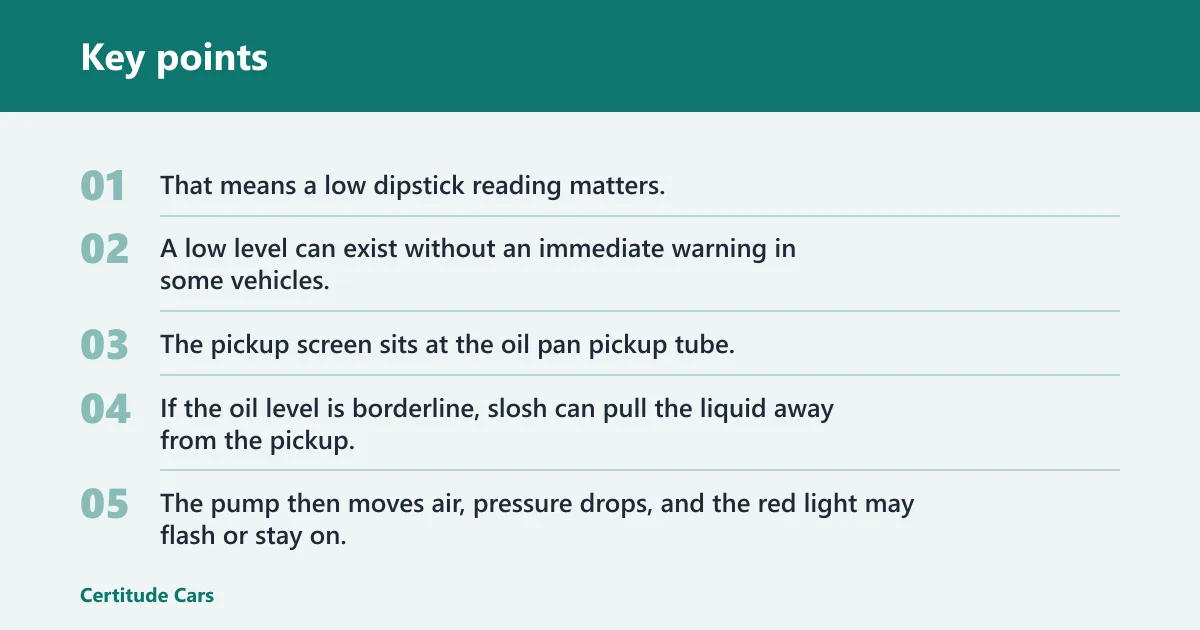
That means a low dipstick reading matters, but the warning is about what the pump can feed the engine with right now. A low level can exist without an immediate warning in some vehicles, and a warning can also appear before the dipstick looks obviously low.
How low oil level can expose the pickup
The pickup screen sits at the oil pan pickup tube. If the oil level is borderline, slosh can pull the liquid away from the pickup. The pump then moves air, pressure drops, and the red light may flash or stay on.
That is why cornering and braking matter. The oil in the pan shifts. A level that seems “close enough” on flat ground can become too low under load.
Why the light may not come on right away
Low oil level does not always trigger a warning immediately. Some engines still maintain pressure until the level falls much lower. Others warn only after pressure drops, which means the light is a late signal rather than an early one.
Say your sedan takes 5W-30 and the dipstick shows below the add mark after a highway trip. Topping it up to the proper mark may solve a light that appears only during hard right turns. If the light returns on straight roads, the cause may be more than low level.
Oil light triage by symptom pattern
Use the symptom pattern first. It tells you whether adding oil may be enough or whether the engine needs to stop now. The same lamp can point to a low sump, a failing pump, a clogged pickup, a bad sensor, or worn bearings.
| Symptom | Most likely cause | What to check first | Should driving stop? |
|---|---|---|---|
| Steady light at startup | Low oil pressure, empty filter after service, sensor issue, or pump problem | Check the dipstick, then verify correct oil weight and recent oil work | Yes, if it stays on after a few seconds |
| Light only at idle | Low hot idle pressure, thin oil, worn pump, or bearing wear | Check oil level and viscosity, then have pressure tested | Yes |
| Light on during turns or braking | Low oil level uncovering the pickup | Check the dipstick after drain-back and inspect beneath the vehicle and around the engine for leaks | Yes, until level is confirmed |
| Light with knocking noise | Severe low pressure, bearing wear, or oil starvation | Shut the engine off and check the dipstick only after it cools | Stop now |
| Light after an oil change | Low fill, wrong filter, wrong oil weight, or a disturbed sensor | Verify the oil level, filter installation, and oil grade | Yes, if the light stays on |
| Light despite full oil | Bad sensor, pump wear, clogged pickup, or bearing wear | Check for leaks, confirm oil grade, and get pressure tested | Yes |
Suppose a compact SUV shows a flickering red lamp only while backing out of a driveway and braking at the end of the block. That pattern points first to a low level uncovering the pickup, not to a harmless glitch. If the level is full and the light still returns, the pressure system needs diagnosis.
What to check first
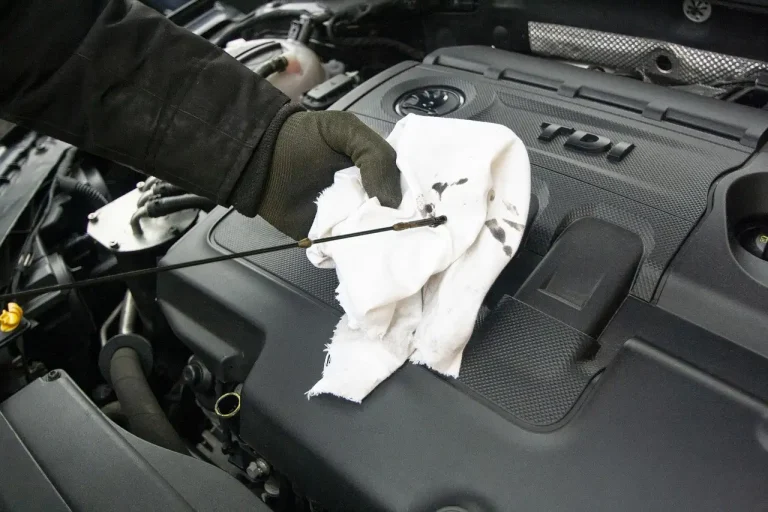
Start with the dipstick, but only after the engine has had time for drain-back. A few minutes after shutdown is usually enough for a basic check on level ground. Then add the correct oil weight only if the level is low. Do not guess at viscosity.
- Park on level ground and shut the engine off.
- Wait a few minutes for oil to drain back to the pan.
- Pull the dipstick, wipe it, reinsert it, and read it again.
- If the level is low, add the oil listed on the cap or in the owner’s manual.
- Look beneath the vehicle and around the engine for leaks.
- Check for blue smoke or oil consumption that suggests burning oil.
- Confirm whether the lamp is a pressure warning or a different oil message.
Oil viscosity matters. Too thin an oil can show low pressure when hot, especially on a worn engine. If the owner’s manual calls for a specific weight, use that grade unless a qualified diagnosis says otherwise. Wrong oil can be part of the problem even when the level is full.
Why the oil light can stay on when full
A full dipstick reading does not rule out a real pressure problem. The oil pressure sensor can fail or read incorrectly, so the lamp may come on even when actual pressure is normal. That said, sensor failure is only one possibility, and it should not be the default guess.
Bad oil pressure sensor
An oil pressure sensor is an electrical sending unit. It can fail, short, or misread pressure. If the level is full and the warning remains, actual pressure testing is the way to confirm whether the sender is lying or the engine really has low pressure.
Oil pump wear or failure
The oil pump creates oil flow and pressure. Wear can reduce output over time, and failure risk rises on high-mileage engines. A bad pump can cause the light at idle, at speed, or both, depending on how far pressure has fallen.
APEX Driver notes that the light can come on if the oil pump sucks air instead of oil. That can happen when the pickup is uncovered, the pickup is blocked, or the level is too low to keep the pump fed.
Clogged oil pickup screen
The oil pickup screen can clog with sludge and debris. That restriction can starve the pump even when oil is present in the pan. The engine may then show a warning at idle first, then under load as pressure drops further.
Bearing wear and low hot idle pressure
Worn engine bearings increase clearances. As those clearances grow, oil leaks past the bearing surfaces more easily, and pressure falls over time. That often shows up as a light at idle or when the engine is hot, and it is commonly accompanied by knocking.
Can low oil cause the light in turns?
Yes. Low oil can cause the lamp to come on while turning because oil slosh can uncover the pickup. Braking can do the same thing. A warning that appears only in corners or on stopping points to a borderline oil level or a pickup that is already having trouble staying covered.
Rx Mechanic says the warning light may appear when driving through a corner or curve. That detail matters because it often separates a quantity problem from a deeper pressure fault. If the light flickers in turns, check the dipstick first, then look for a reason the oil is missing.
What intermittent flicker usually points
An intermittent flicker often points to a borderline condition. It may be a low level, a weak pump, or pickup uncovering during a specific maneuver. It is not a “wait and see” signal. AA1Car says a flickering warning light can be the first sign of trouble.
Is it safe to drive with the oil light on?
No. A red oil pressure light is an urgent stop-driving warning. If it stays on after a brief start-up moment, or if it comes on while driving, the safest move is to stop and shut the engine off. AA1Car warns that low pressure can lead to engine seizure if ignored.
If the light comes on with knocking, stop now. Noise means the engine may already be running with damaging metal-to-metal contact. A short extra drive can turn a fixable problem into major internal damage.
Frequently asked questions
When does low oil light come?
It usually comes on when oil pressure falls below a safe level, not the instant oil level drops a little. Some engines warn at startup, at idle, or during turns if the pickup uncovers. Others stay quiet until pressure has already dropped far enough to matter.
Why oil light on when full
A full dipstick reading does not by itself rule out a bad sensor, a clogged pickup, a worn pump, thin oil when hot, or bearing wear. The level can be fine while pressure is not. If the lamp stays on, the engine needs diagnosis, and actual pressure testing may be required.
Can a bad oil pressure sensor turn the light on?
Yes. The oil pressure sensor is electrical, and it can fail or misread. That can turn the light on even when actual pressure is normal. But sensor failure should be confirmed, not assumed, because a bad pump, pickup blockage, or bearing wear can produce the same warning.
Will low oil always trigger the oil light?
No. Low oil can exist without an immediate warning in some vehicles. The lamp may not come on until the pump starts drawing air or pressure drops far enough. That is why a dipstick check matters even when the dashboard stays dark.
What should I check first when the oil light comes on?
Check the dipstick first, after a few minutes of drain-back. If the level is low, add the correct oil weight. Then look for leaks, burning oil, and recent oil service errors. If the level is full and the light remains, stop driving and have the pressure checked.
What else can cause the oil light to come on and off?
A flickering or on-and-off light can come from low oil level, a pickup that uncovers in corners or braking, a failing pressure sensor, thin oil when hot, or a worn pump. Intermittent warning behavior is still serious. It means the pressure margin is too small.