Title Transfer and Registration: Can You Do Both Together?
Yes, if your state allows one DMV transaction and you bring the signed title, ID, fees, and any required tax forms. Missing a signature, lien release, emissions test, or other required paperwork can trigger a rejection, delay plates, and leave the car unregistered. This guide shows when both filings can happen together, when they cannot, and what stops a one-visit DMV finish.
Can you file them together?
Yes, sometimes. Title transfer and registration are separate steps, but many states let you submit both in one visit when the title is complete, the buyer can prove insurance, and no lender, inspection, or paperwork issue blocks the file. If any gate fails, the DMV may accept the title paperwork first and hold registration.
When same-visit filing is possible
Same-visit filing works best in a clean private sale with a properly assigned title, current insurance, and all state forms ready. Some offices can issue plates and a registration card right away, while the title itself may arrive later by mail. New York is one example: buyers can complete title transfer without applying for registration, while other offices may handle plates and registration in the same visit.
When you need two steps instead
You usually need two steps when the title is incomplete, the vehicle has an unreleased lien, the buyer lacks insurance proof, or inspection and emissions documents are missing. You may also be forced into a title-only filing if the DMV needs corrections before it can issue registration. In those cases, the title file is accepted first and the road-use paperwork follows later.
Title filing checklist
| Gate | Yes | No |
|---|---|---|
| State allows same-visit processing | You can try to file title and registration together. | Plan for separate visits or a title-first filing. |
| Title is signed correctly | The DMV can accept the ownership transfer file. | Fix missing signatures, dates, or assignment errors first. |
| Lien is released | A clean title path is open. | Resolve the lender interest before transfer. |
| Insurance is active | Registration can usually move forward. | Get valid proof of insurance before plate issuance. |
| Inspection or emissions is current | The office can process the car under state rules. | Complete testing before the DMV visit. |
| Buyer has ID | The clerk can verify the applicant. | Bring acceptable identification before filing. |
| Taxes and fees are payable | The office can finalize the transaction. | Prepare payment for tax, title, and registration charges. |
| No paperwork corrections are needed | File together. | Resolve blockers before visiting DMV. |
| Outcome | File together if every gate is yes. | File title only first if plates are blocked, or resolve blockers before visiting DMV if the file is incomplete. |
What is the difference?
Title transfer proves who legally owns the vehicle. Registration gives permission to drive it on public roads. They are related, but one does not replace the other. A signed title starts ownership transfer; registration depends on the DMV accepting that transfer and, in many states, proof of insurance.
What a title proves
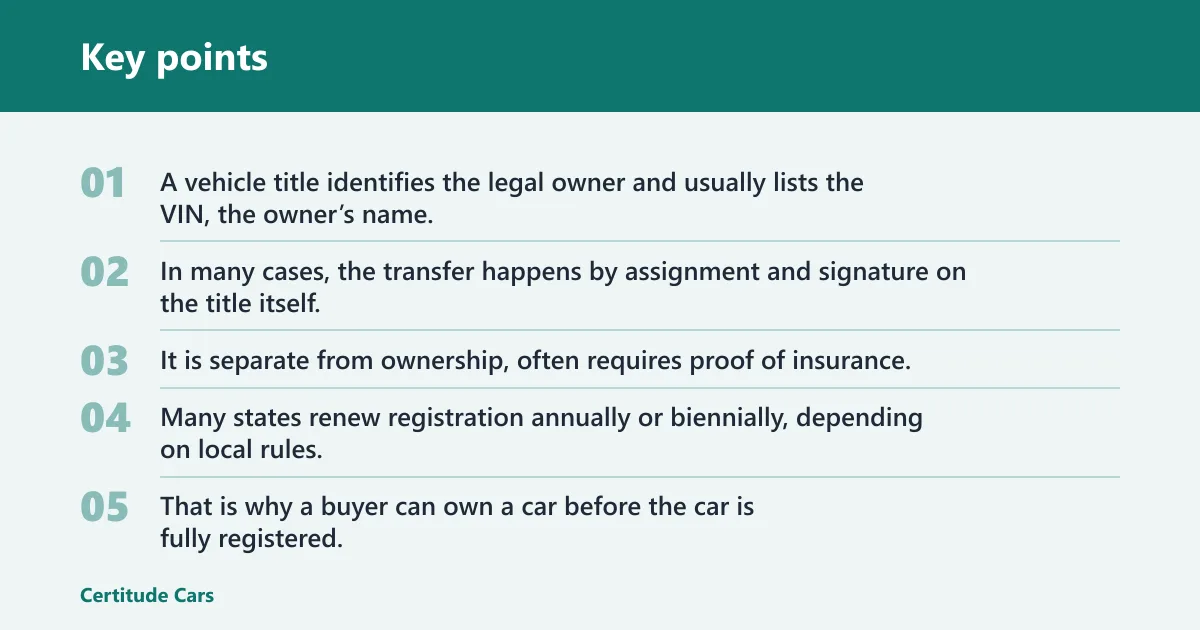
A vehicle title identifies the legal owner and usually lists the VIN, the owner’s name, and any lienholder information. It can be paper or electronic. In many cases, the transfer happens by assignment and signature on the title itself, and some vehicles also need odometer disclosure at transfer.
What registration allows
Registration authorizes road use. It is separate from ownership, often requires proof of insurance, and may include plates and renewal stickers. Many states renew registration annually or biennially, depending on local rules. That is why a buyer can own a car before the car is fully registered.
Why one does not replace the other
A title without registration leaves you with ownership paperwork but no road permission. Registration without a valid title transfer can leave ownership unresolved. The DMV wants both files to match before it issues permanent road-use records. That sequence matters most when a seller, buyer, and lender are all involved.
What documents do you need?
The exact packet varies by state, but the core documents are predictable. Most buyers need the signed title, an odometer disclosure when required, insurance proof, ID, payment, and any tax or inspection forms the state asks for. A bill of sale and lien release often make the file easier to accept.
Signed title and odometer disclosure
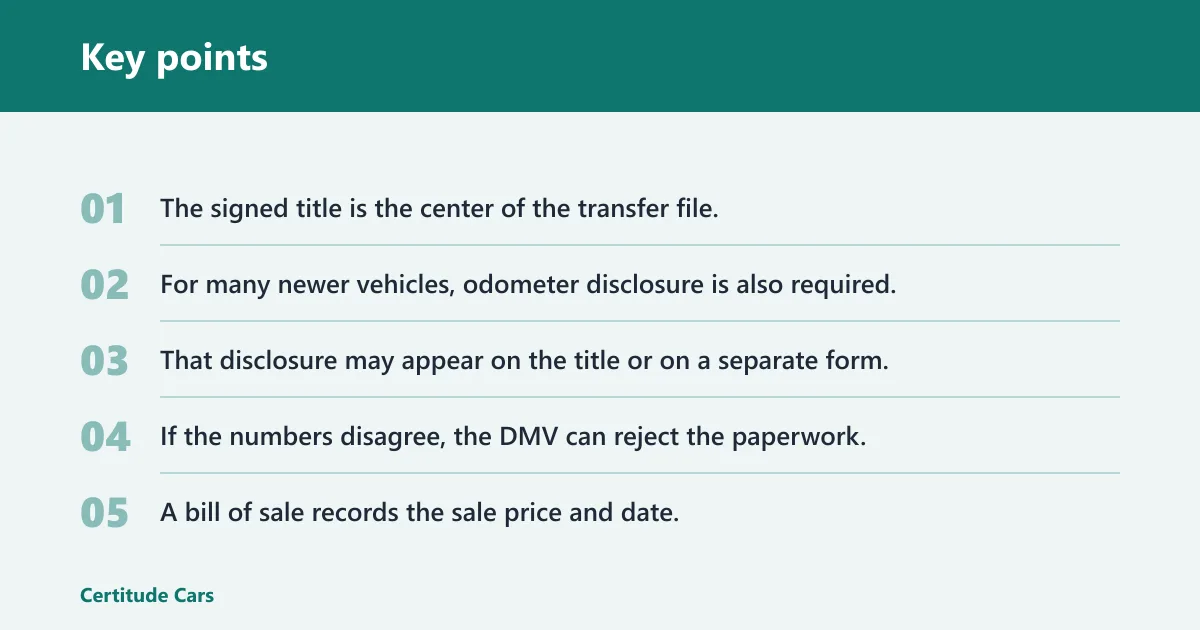
The signed title is the center of the transfer file. For many newer vehicles, odometer disclosure is also required, and the mileage must match the actual reading at transfer. That disclosure may appear on the title or on a separate form. If the numbers disagree, the DMV can reject the paperwork.
Bill of sale and lien release
A bill of sale records the sale price and date. It supports the title transfer file and some states require it. A lien release matters when the vehicle was financed. Until the lender’s interest is cleared, the state may not issue a clean title, which can block registration too.
Insurance card, ID, and payment
Insurance proof is commonly required before registration and before plates are issued. It is not the same thing as proof of ownership. Bring government-issued ID and payment for sales tax, title fees, and registration fees.
Any state-specific inspection or tax forms
Some states want emissions or safety inspection records before they register the car. Others ask for local tax paperwork or county office forms. A typical file may include an assigned title, bill of sale, lien release, insurance proof, ID, and title application.
Picture a buyer who brings a signed title, an insurance card, and payment to the counter, but the odometer disclosure is blank. The clerk may accept nothing until the form is corrected, which means the buyer leaves without plates even though most of the packet was ready.
Can I transfer only the title without registering the car?
Yes, in some states. Title-only filing is common when the buyer wants ownership records updated now but cannot complete registration yet. That option is useful when another document is missing or when the buyer will not drive the car right away.
Private sale with missing registration proof
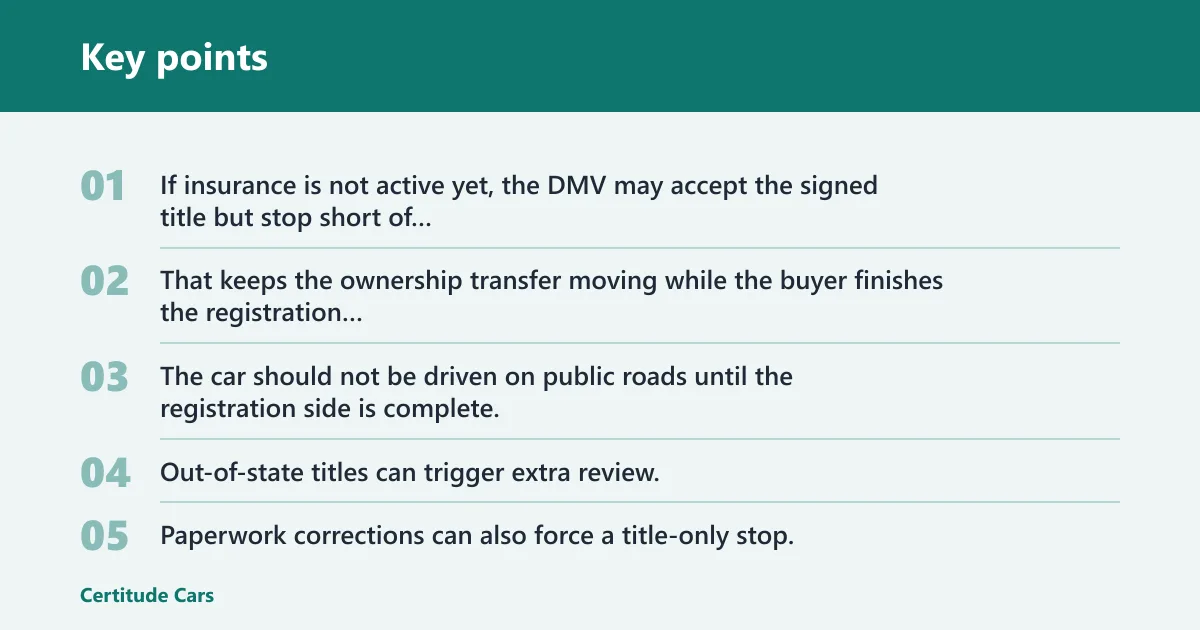
If insurance is not active yet, the DMV may accept the signed title but stop short of issuing plates. That keeps the ownership transfer moving while the buyer finishes the registration requirements. The car should not be driven on public roads until the registration side is complete.
Out-of-state or corrected paperwork cases
Out-of-state titles can trigger extra review, especially if the form layout differs or a notary is required by the issuing state. Paperwork corrections can also force a title-only stop. If the clerk cannot verify the assignment, mileage, or owner details, registration usually waits until the title file is clean.
Lien or title issues that block plates
A missing lien release is a classic blocker. So is any unresolved title defect that keeps the DMV from issuing a clean ownership record. In those cases, you may be able to submit the paperwork, but you should not expect plates until the lender interest or title error is fixed.
Why some states let you do both
Some states run the title and registration process through the same office window, which lets the clerk review one packet and complete both actions if the file is ready. Other states split the work between the DMV and a county tax office. The difference is administrative, but it changes whether you leave with plates that day.
One office visit, two actions
When a state accepts both transactions together, the clerk can process the ownership transfer and the road-use application in the same session. That is why some buyers get plates immediately while the title arrives later by mail. The process is still separate; it is just handled at the same counter.
Plate issuance rules by state
Some states issue plates on the spot. Others mail the plate or registration card later, and a few allow title-only filing first. The title itself may still arrive later by mail within 90 days. That split is normal in many offices.
County tax office and DMV differences
In some places the county tax office handles tax collection while the DMV handles the title record. That division can change where you go, which forms you bring, and whether the car leaves with plates. Deadlines vary by state, so the same sale can move differently depending on the office structure.
Suppose you buy a used sedan on a Friday afternoon in a state that issues plates the same day, but the seller forgot to sign the odometer statement. The clerk can still spot the missing piece immediately. The visit ends with a correction instead of a registration card.
Frequently asked questions
Can you do a title transfer and registration at the same time?
Yes, in some states. The steps are separate, but they can be handled in one DMV visit when the title is properly assigned, insurance is active, fees are ready, and no inspection or lien issue blocks the file. If a required item is missing, the office may split the process into two visits.
Do I have to transfer the title before registering the car?
Usually the DMV needs the title transfer accepted before it can issue registration, because registration depends on a valid ownership record. Some offices can process both together, but the title still has to pass review first. If the title is incomplete, registration usually waits until the paperwork is corrected.
What documents do I need to transfer title and register a car?
Plan on bringing the signed title, odometer disclosure if required, proof of insurance, ID, payment, and any state tax or inspection forms. A bill of sale and lien release may also be required. The exact list depends on the state, so check local DMV or county office rules before you go.
Why do some states issue plates and title paperwork in one visit?
Those states use one office visit for two linked transactions. If the file is complete, the clerk can accept the title transfer and issue registration at the same time. Some states also print plates immediately while mailing the title later, so the ownership record and the road-use permit do not arrive together.
What happens if I turn in title paperwork without proof of insurance?
In many states, the DMV can accept the title packet but refuse to issue registration or plates without insurance proof. That leaves ownership transfer and road permission out of sync.
How long do I have to retitle and register a used car after buying it?
Deadlines vary by state, but the buyer generally files the signed title at the DMV within the state deadline. Do not assume your local office uses the same schedule as another state.
What is the difference between a title transfer and registration?
Title transfer changes legal ownership records. Registration gives permission to drive the car on public roads and often includes plates and renewal stickers. They are separate steps, even when the DMV lets you complete them in one visit. If the title file is rejected, registration usually cannot be finished.