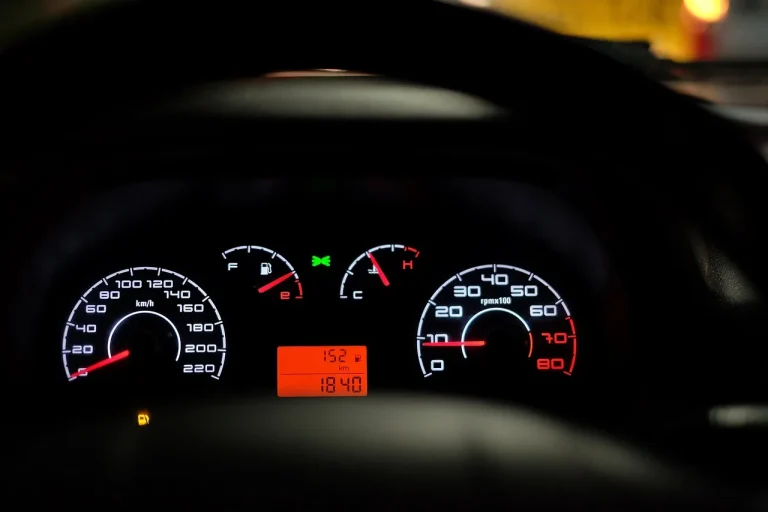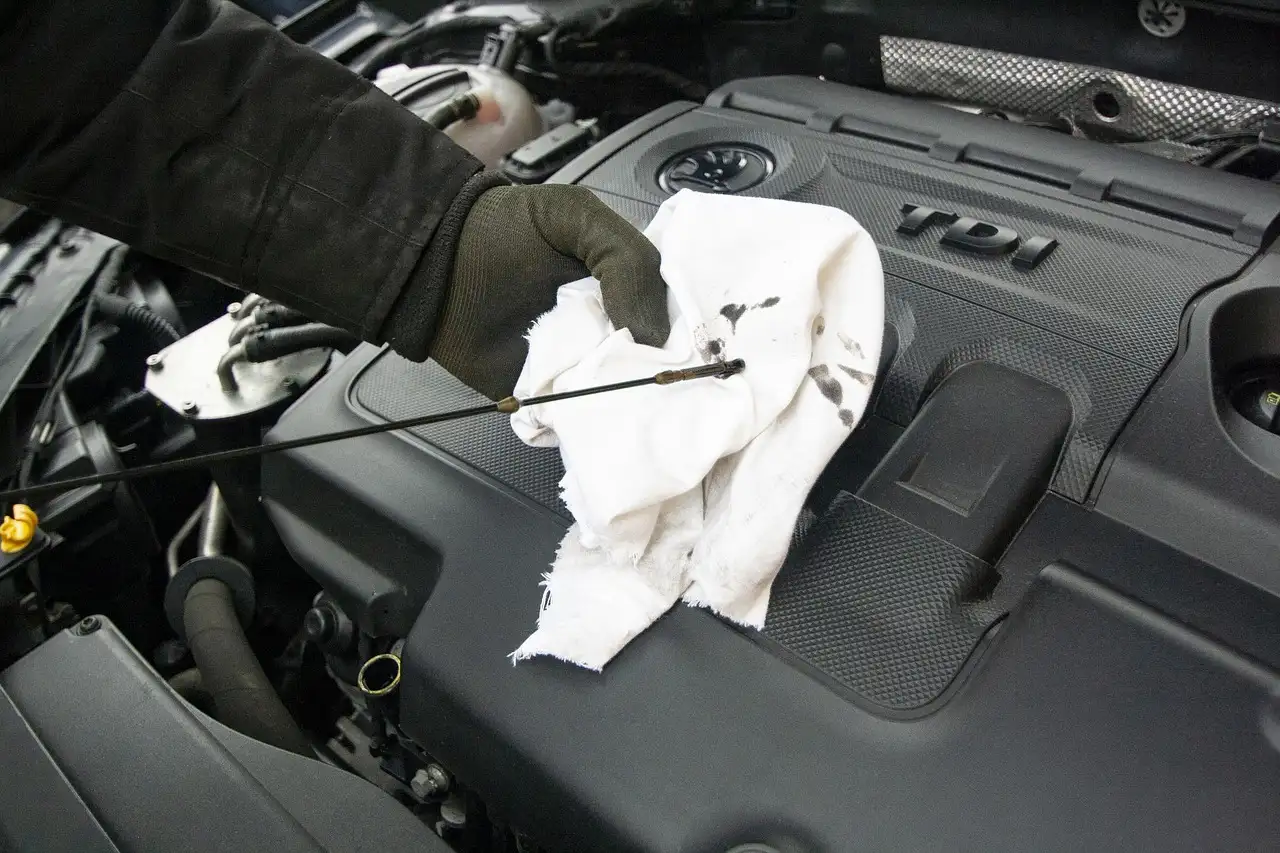
Why Did My Check Engine Light Come on After an Oil Change?
A check engine light after an oil change is usually a coincidence or a service-related issue such as a loose gas cap, unplugged sensor, or damaged connector; if the oil level is wrong or the light flashes, stop driving. The malfunction indicator lamp can signal an emissions or engine fault under OBD-II, and a steady light is very different from an oil-pressure warning lamp. Ignoring either can turn a small leak or bad connection into rough running, misfires, or catalytic-converter damage. NHTSA explains that OBD-II monitors emissions-related faults and stores diagnostic trouble codes; OEM owner manuals also describe flashing MIL behavior as urgent and oil-pressure warnings as immediate-stop conditions. This guide shows what an oil change can disturb, what it usually cannot cause, and the fastest checks to separate a service mistake from a real engine fault.
Why did the light come on now?
The timing matters because it can point to either a service mistake or a problem that was already there. A light that appears right after service can come from something moved during the job, but it can also be a fault that only became obvious once the car was started again or driven home. The sequence of events is more useful than the receipt.
What should I look at first?
Start with whether the light is steady or flashing, whether an oil-pressure warning is also on, and whether the engine sounds or feels different. A check engine light, also called the malfunction indicator lamp, is tied to stored diagnostic trouble codes. A flashing MIL is treated as more urgent in many owner manuals because it can indicate a severe misfire that can damage the catalytic converter. GM owner manuals and other OEM guides describe this urgency in similar terms.
Coincidence versus cause
An oil change does not create every check engine light. It can expose a weak part, but it cannot explain every stored code. A loose gas cap can make the car computer think there is an emissions leak, and newer vehicles may keep the light on until the fault is fixed and the drive cycle is complete. The oil cap itself usually does not directly trigger the CEL on most vehicles; low oil level, low oil pressure, disturbed EVAP parts, sensor connectors, or incidental wiring issues are more plausible.
When a pre-existing problem shows up after service
A pre-existing issue may stay hidden until the battery is disconnected, the engine bay is moved around, or the vehicle is restarted after service. The code can remain stored even after the light goes out, so the scanner history still matters. Clearing the light without checking the code first erases useful information. Many readiness monitors also require specific drive conditions before they can complete, so a fault may not disappear just because the warning lamp does.
What does the check engine light mean?
The check engine light is a fault indicator for engine and emissions management. It can stay steady or flash. Either way, the light stores an error code in the car’s computer, and a diagnostic scanner can read the code and identify the cause. NHTSA’s OBD-II information and OEM manuals both describe the MIL as an emissions and engine management warning, not a generic “something is wrong” light. Ford owner manuals and similar service guides also distinguish between MIL warnings and oil-pressure warnings.
Steady versus flashing light
A steady light usually points to a fault that needs diagnosis soon, but not always an immediate stop. A flashing or blinking check engine light is described as serious in OEM manuals. It can indicate a severe misfire or a damage risk, so you should not keep driving normally if it starts flashing. If a flash appears with rough running, the safest assumption is active catalyst-damaging misfire until proven otherwise.
How do OBD-II monitors store trouble codes?
The OBD-II system monitors vehicle systems and stores diagnostic trouble codes, or DTCs. Those codes help separate a loose gas cap from a misfire, sensor fault, or evaporative-emissions leak. The code remains stored after the light goes out, so a short-lived warning can still be diagnosed later. Readiness monitors may need a complete drive cycle before they reset, which is why a fault can remain “pending” even after the lamp changes behavior.
What can an oil change disturb?
An oil change can disturb parts around the service area. It can also reveal a problem that was already close to failing. The usual suspects are simple: the filter, the drain plug, the drain seal, nearby connectors, and anything around the filler neck or gas-cap area that was handled during the visit. Modern engine bays are crowded, so even a minor tug on a connector can matter.
Oil filter installation problems
The oil filter can be incorrectly installed, not tightened, damaged, or restricted if it is not seated correctly. That can cause a leak or oil flow problem. A loose filter deserves immediate inspection because oil loss can become an oil-pressure issue if the engine runs low enough. Service manuals commonly emphasize verifying filter gasket integrity and correct installation torque after replacement.
Drain plug and drain seal leaks
A loose or stripped drain plug, or a damaged drain seal, can leak oil after service. If enough oil escapes, pressure can drop. That is a different problem from a check engine light tied to emissions or airflow, and it needs quick inspection under the car. If oil is visibly dripping, the concern is no longer “why is the CEL on?” but “is the engine being starved of oil?”
Gas cap, EVAP parts, and nearby connectors
The gas cap and EVAP system are common causes of a check engine light, and they may be disturbed during service-area handling. A cap that is loose, damaged, or not fully seated can set an evaporative-emissions code. Nearby connectors can also be bumped, left unplugged, or spilled on. OEM and OBD resources treat EVAP leaks as a classic cause of MIL illumination, especially small-leak faults after refueling or after the tank/neck area has been disturbed.
A common first-timer mistake is to assume every post-service light came from the drain plug. In reality, the warning may come from a gas cap, an unplugged sensor, or a code that was already waiting before the oil change.
Is it oil level, oil pressure, or just the CEL?
Check the oil level first, then separate that from a true oil-pressure warning. The oil pressure sensor monitors oil pressure rather than oil level directly, and it can also fail or trigger false warnings. Low oil level and low oil pressure are related, but they are not the same problem, and the warning lamps are not interchangeable.
How do I check the oil level first?
Use the dipstick or the vehicle monitor, depending on the model. If the level is low, add the correct oil before driving further. If it is overfilled, that can also create problems, so do not assume more oil is automatically safer. If the oil level is correct yet the oil-pressure warning remains, the next concern is pressure, leak, or sensor fault rather than simple top-off.
What does a low-pressure warning mean?
An oil-pressure warning means the engine may not be getting enough pressure to protect internal parts. Do not treat that like a standard emissions light. If the oil-pressure warning appears, stop and inspect immediately, especially if there is knocking, ticking, or a burning-oil smell. Many OEM manuals direct drivers to stop the engine as soon as it is safe when an oil-pressure warning comes on.
Why can the oil pressure sensor mislead?
The sensor itself can fail or send a false warning. That is why the warning should be paired with an oil-level check, leak check, and code readout. A faulty sensor can mimic a pressure problem, but you should not assume that without evidence. The same caution applies to damaged connectors at the sender or wiring that was accidentally tugged during service.
Oil-change triage table
| Symptom timing | Likely cause | What to inspect first | Whether it is safe to drive |
|---|---|---|---|
| Immediate light, steady | Loose gas cap, unplugged connector, disturbed EVAP part, pre-existing DTC | Gas cap, filler area, underhood connectors, code stored in OBD-II | Maybe, if no oil-pressure warning and no drivability change; scan soon |
| Delayed light after one or more trips | Intermittent EVAP leak, sensor fault, code that completed its monitor | Read stored DTCs, inspect for leaks, check recent service items | Usually short-term only if the car runs normally and no other warning appears |
| Flashing light | Misfire or severe engine fault | Pull over, inspect for rough running, do not clear the code first | No, stop driving as soon as it is safe |
| Oil-pressure warning | Low oil level, loose filter, loose or stripped drain plug, sensor fault | Shut down, check level, inspect for leaks under the vehicle | No, pull over and inspect immediately |
| No symptoms, light appears later | Stored DTC that completed later, pending emissions fault, intermittent connector issue | Scan the code, verify cap tightness, inspect service area | Often yes for a brief trip if the light is steady and the car drives normally |
Which DTC families are most likely after service?
There is no single common code after an oil change. Different vehicles store different DTCs, and the code must be interpreted, not just erased. The pattern matters more than guessing from timing alone, and codes vary by vehicle platform, engine, and emissions package.
| DTC family or example pattern | Common symptom pattern | First checks after an oil change |
|---|---|---|
| EVAP small leak / gas cap family | Steady CEL, no drivability change, often appears after a few drives | Cap seated and tightened, filler neck sealing surface, EVAP hoses, recent service-area disturbance |
| Misfire family | Rough idle, shaking, flashing CEL, loss of power | Stop driving, look for unplugged coils/sensors, scan for misfire counts, inspect for oil or connector contamination |
| Oil pressure or oil pressure sender family | Oil-pressure warning, possible ticking/knocking, may occur right after service | Verify oil level, inspect filter and drain plug, check sender connector and wiring, look for leaks |
| Cam/crank correlation family | Hard start, stumble, intermittent stall, CEL after engine restart | Check nearby wiring, connector seating, oil level, and whether any harness was disturbed during service |
| MAF / airflow connector family | Weak acceleration, hesitation, high/low idle, CEL soon after work | Inspect air intake ducting, MAF connector, hose clamps, and any connector that may have been nudged |
EVAP and gas-cap codes
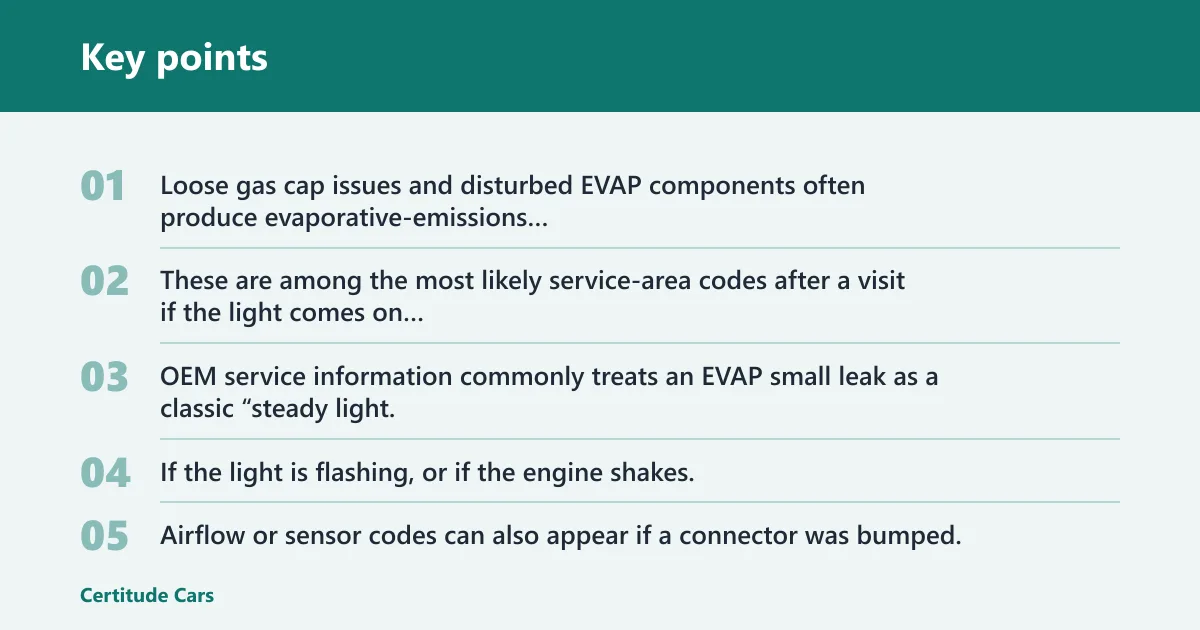
Loose gas cap issues and disturbed EVAP components often produce evaporative-emissions codes. These are among the most likely service-area codes after a visit if the light comes on soon after the car leaves the shop and nothing feels wrong with the way it drives. OEM service information commonly treats an EVAP small leak as a classic “steady light, normal driving” complaint.
Misfire or airflow-related codes
If the light is flashing, or if the engine shakes, misfire-related codes are more concerning. Airflow or sensor codes can also appear if a connector was bumped. Those faults need diagnosis, not a guess based on the timing alone. A flashing MIL is not the time to keep driving “to see if it clears.”
Codes that point to oil pressure or sensor faults
Oil pressure or oil-pressure-sensor codes deserve special attention because the sensor monitors pressure, not oil level directly. A low level, a leak from the filter or drain plug, or a bad sensor can all change what the car reports. That is why checking the level and looking for leaks comes before clearing anything. If the warning lamp is for oil pressure rather than the CEL, treat it as a shutdown-now concern.
Should you keep driving?
Stop driving if the light flashes, if there is an oil-pressure warning, or if the engine is running badly. A steady light with no drivability change is less urgent, but you should still read the code soon and inspect for leaks or a loose cap before you drive far. The difference between a CEL and an oil-pressure lamp matters because the latter can indicate immediate engine-damage risk.
When should I stop and inspect?
Pull over right away if you see an oil-pressure warning or if the check engine light begins flashing. Also stop if you hear new knocking, loud ticking, or see fresh oil under the car. Those signs point to more than a simple service reminder. An owner’s manual warning is the right authority here: if the oil-pressure lamp is on, the engine should not keep running until the cause is checked.
When is a short drive reasonable?
If the light is steady, the engine runs normally, and the oil level is correct, a short drive to a scanner or repair shop may be reasonable. Keep it short. Do not treat the light as cleared just because the car still moves well. A nearby shop or parts-store scan can often confirm whether the issue is EVAP, misfire, or something unrelated to the oil service.
When should the car be towed?
Have the car towed if the oil-pressure warning stays on, the light flashes, or the engine runs rough enough to shake the car. Driving further can turn a small leak or misfire into a larger repair. A battery disconnect may temporarily reset the light in some cars, but newer vehicles may turn the light back on if the issue remains. That reset does not fix the fault and should not be used as a diagnosis.
What should you check first after the light comes on?
- Check the oil level on the dipstick or vehicle monitor.
- Look for leaks around the filter and drain plug.
- Confirm the gas cap is tight and seated correctly.
- Inspect nearby connectors and obvious disturbed parts.
- Read the stored DTCs with a scanner before clearing anything.
Frequently asked questions
Why did my check engine light come on right after an oil change?
Right-after-service timing usually points to a disturbed part, a loose gas cap, an unplugged connector, or a pre-existing fault that became visible after restart. It can also be unrelated to the oil change. A steady light needs a code read; a flashing light or oil-pressure warning needs immediate action.
Is it normal for the check engine light to come on after an oil change?
It is common enough to happen, but it is not something to ignore. The timing may be coincidence, or it may reflect a service-related issue such as a loose cap, leak, or connector. The safe approach is to check the oil level, inspect for leaks, and read the stored code. A normal-looking engine can still have an emissions fault stored in memory.
Could the mechanic have caused the light by forgetting something?
Yes, if a gas cap was left loose, a connector was not reattached, or a filter or drain plug was installed poorly. That said, the shop may also have uncovered a problem that was already there. The code and the symptoms tell you which is more likely.
Can an oil cap, drain plug, or filter issue trigger the light?
A loose gas cap can trigger an emissions-related check engine light. The oil cap itself usually does not directly cause the CEL on most vehicles. A loose filter or drain plug is more likely to create a leak or low-pressure warning than a pure emissions code. If any of those parts are suspect, inspect them first and do not clear the code before checking for leaks.
What codes are most common after an oil change?
There is no single code that appears on every vehicle. Common patterns include evaporative-emissions codes from a loose gas cap, misfire codes if the engine runs poorly, and oil-pressure or sensor-related codes if oil flow or pressure is affected. The stored DTC must be read and interpreted. Drive-cycle monitors may also delay when the lamp appears or clears, so timing alone is not enough.
Should I keep driving or pull over if the light came on after service?
Pull over if the light flashes, if an oil-pressure warning appears, or if the engine runs rough. If the light is steady and the car runs normally, a short drive to confirm the code may be reasonable. Do not keep driving normally if oil pressure is in question.
Could low oil pressure be the reason the light came on?
Yes. Low oil pressure can follow a loose filter, a loose or stripped drain plug, a damaged seal, or low oil level from a leak. The oil pressure sensor can also fail or give a false warning. Because pressure problems can damage the engine quickly, treat that warning as urgent.
Do I need a scanner to check what happened?
Yes, a diagnostic scanner or code reader is the fastest way to see what the car stored. The OBD-II system keeps the DTC even after the light goes out, and that code helps separate an emissions issue from a pressure problem or a service mistake. Clearing without checking first wastes information.
Sources
- NHTSA: OBD-II and vehicle diagnostics
- Honda Owner’s Manuals
- Toyota Owners: Manuals and guides
- GM Owner Center: Owner manuals
- Ford Owner Manuals
- Chrysler Owner Manuals
- Nissan Owner Manuals