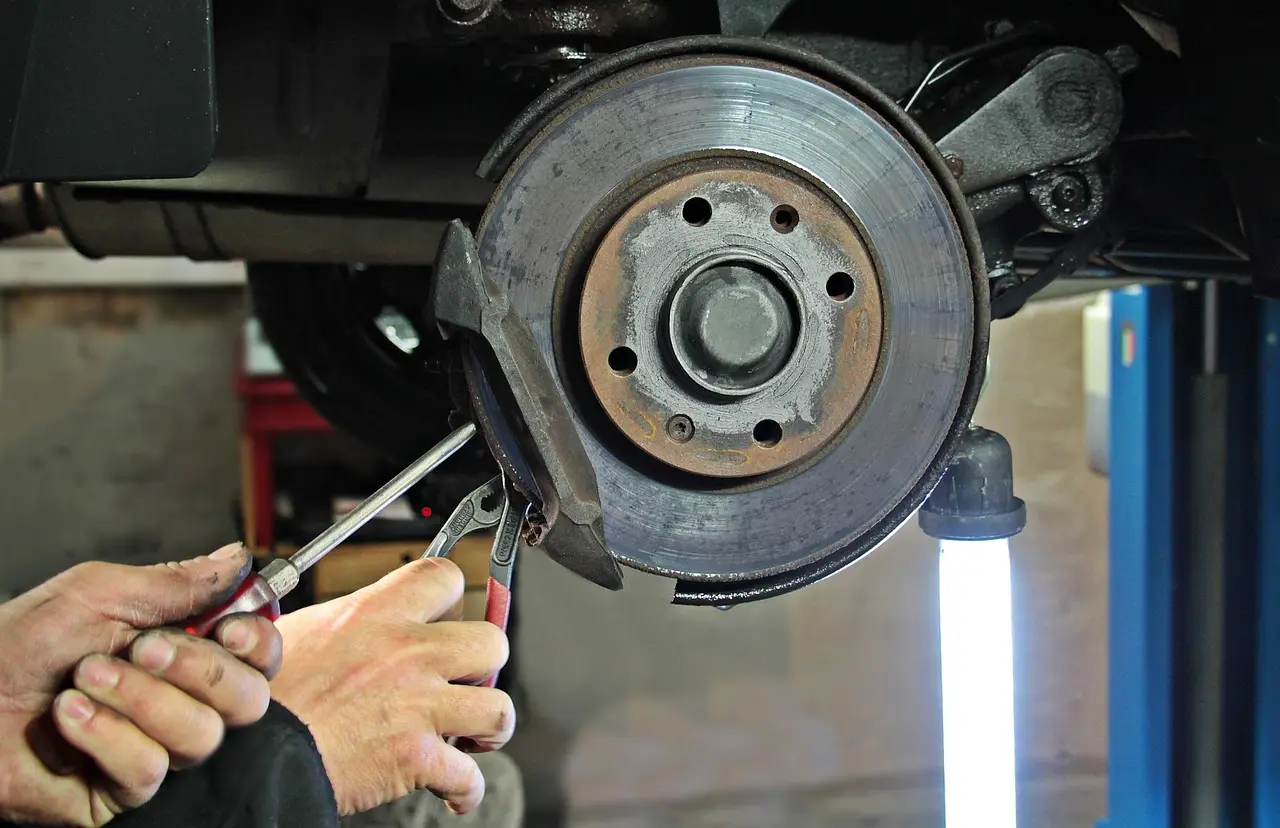
How to Estimate Car Repair Costs Before Approval
Ask for a written estimate that breaks out labor, parts, shop fees, taxes, and likely add-ons, then plan for about 10% to 30% above the quote for surprises. Skip that step, and a repair can become a bigger bill, a longer wait, or work you never approved. This guide shows how to turn a vague quote into a defensible pre-approval budget before you say yes.
This guide is part of our Repair costs: what car fixes really cost series.
What you need first
- Year, make, model, trim, and engine size.
- VIN, which helps confirm build-specific parts and equipment.
- Drivetrain details, including front-wheel drive, rear-wheel drive, all-wheel drive, or four-wheel drive.
- EV or hybrid status, if applicable.
- Symptoms, warning lights, and when the problem appears.
- A repair budget limit and, if relevant, your insurance deductible.
- Space to compare at least two written estimates.
How do you build a repair estimate?
Build the estimate from five pieces: diagnosis, labor, parts, fees, and likely supplements. Ask for a written estimate before you authorize work, and make sure it states what is included, what is excluded, and whether approval is required before any extra labor starts.
- Gather vehicle details. Give the shop the year, make, model, trim, engine, VIN, and drivetrain or EV/hybrid status. Those details affect labor time, part fitment, and whether a part is VIN-specific.
- Separate diagnosis from repair. Ask what the scan or inspection costs, what tests are included, and whether the fee is credited if you approve the repair. A fault-code readout is not the same as a full diagnosis.
- Estimate labor hours. Ask for the labor hours line by line, not a single total. Many shops price by shop hourly charge, and some apply a minimum billed time even for short jobs.
- Price the parts. Ask whether the quote uses OEM, aftermarket, or remanufactured parts. Check whether the estimate includes shipping, a core charge, or a return credit for the old part.
- Add fees and taxes. Include shop supplies, hazardous-waste fees, and sales tax where it applies. These can be small on paper and still change the final bill.
What information do I need to get an accurate repair estimate?
You need the vehicle’s exact build data and the complaint itself. A 2020 sedan with a 2.0L engine may use a different alternator, sensor, brake caliper, or wiring connector than the same model with a different engine or drivetrain. VIN-based quoting matters because some parts change by production date or option package.
For electrical, hybrid, or EV repairs, ask the shop to note battery system status, high-voltage safety steps, and any scan or calibration time. For body damage, the estimate should say whether hidden damage is likely and whether teardown is needed before a final number can be confirmed.
How do labor rates and parts prices change the total?
Labor rate and parts choice usually move the bill more than any other line item. Dealer shops often charge more per hour than independent shops, and many repairs also carry a minimum billed time. Parts price can swing when the job needs OEM, a remanufactured unit, or a part that is backordered or VIN-specific.
Dealer versus independent shop
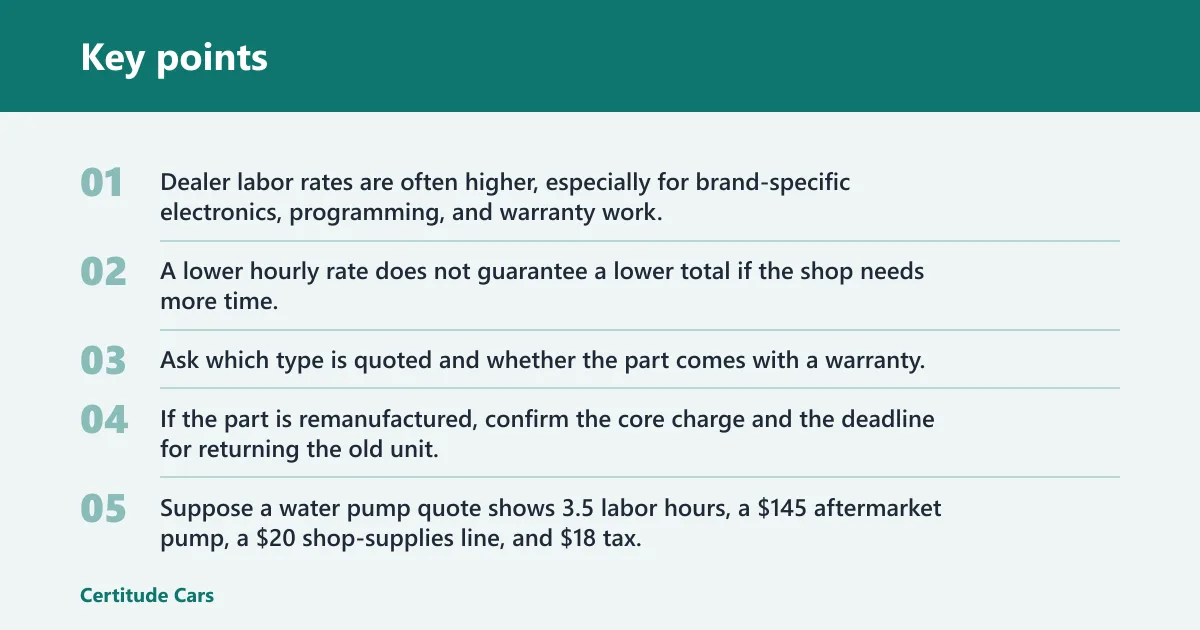
Dealer labor rates are often higher, especially for brand-specific electronics, programming, and warranty work. Independent shops may be less expensive on routine mechanical repairs, but they can still charge specialty rates for diagnostics, calibration, or drivetrain work. A lower hourly rate does not guarantee a lower total if the shop needs more time.
OEM, aftermarket, and remanufactured parts
OEM parts are built to the vehicle maker’s spec, aftermarket parts are made by other suppliers, and remanufactured parts are rebuilt from used cores. Ask which type is quoted and whether the part comes with a warranty. If the part is remanufactured, confirm the core charge and the deadline for returning the old unit.
Backorders, shipping, and core charges
Parts delays can change the budget. If a part is on backorder, the shop may need a more expensive source, split the repair into stages, or hold the car longer. Ask whether expedited shipping is included, and whether the estimate assumes a return credit that has not yet been processed.
Suppose a water pump quote shows 3.5 labor hours, a $145 aftermarket pump, a $20 shop-supplies line, and $18 tax. If the shop says the OEM pump is backordered for two weeks and the aftermarket version is in stock, compare the faster option against the original estimate before you approve the change.
When should you compare repair sources?
Compare sources before approval if the repair is expensive, the part is hard to find, or the diagnosis is not clear. Use online labor-time databases, parts marketplaces, VIN-based quoting tools, and at least one second written estimate when the total is close to your budget limit or to the car’s value.
- Check labor time first. Compare the quoted hours against an online labor-time database or a second shop’s estimate. If one shop is far outside the usual range, ask what extra testing, calibration, or teardown it included.
- Verify parts availability. Search parts marketplaces by VIN or exact part number. Confirm whether the quoted part is new, remanufactured, or used, and whether shipping adds to the total.
- Ask for a second written estimate. Request the same job in writing from another shop. Use the same vehicle details and symptom description so the comparison is fair.
A common mistake is approving a brake-job estimate without asking how much of the bill is parts versus labor. A $1,200 quote with a $180 diagnostic fee, a $90 scan, and a $120 supplement risk is not the same as a $1,200 quote that already includes those items.
Estimate repair cost worksheet
This worksheet turns a vague quote into a pre-approval budget. Use it to separate the likely base cost from the amount you should hold back for supplements, especially when the job may involve rust, broken fasteners, hidden damage, or VIN-specific parts.
| Symptom | Likely labor hours | Labor rate | Parts type | Fee types | Risk of supplements | Final decision threshold |
|---|---|---|---|---|---|---|
| Brake squeal and thin pads | 1.5 | $160/hour | Aftermarket pads and rotors | Shop supplies, tax | Low unless calipers or hardware are seized | Approve if total stays under $500 |
| Check engine light with code P0420 | 1.0 diagnosis + 1.5 repair | $180/hour | OEM sensor or catalytic converter | Scan fee, tax, possible disposal fee | Medium if exhaust bolts are rusted | Pause if total exceeds deductible or $900 |
| Front-end collision damage | 6.0 to 12.0 | $170/hour | OEM body parts or used panels | Hazardous-waste fee, shop supplies, tax | High if teardown reveals hidden structure damage | Compare to car value before approval |
Filled example: a brake job quoted at $160 per hour, 1.5 labor hours, $220 for pads and rotors, $15 in shop supplies, and $18 in tax comes to $473 before any surprise items. A reasonable pre-approval ceiling would be about $525 to allow room for worn hardware or seized guide pins.
Common mistakes to avoid
Do not approve work from a one-line quote. Ask for the labor hours, the part number or part type, the diagnostic fee, and any added charges before you agree. A written repair estimate should also say that authorization is required before any extra work begins.
- Ignoring hidden damage. Body repairs and rusted mechanical fasteners often change after teardown. Build a supplement buffer into the budget.
- Forgetting minimum billing. Some shops bill at least one hour, even for a 20-minute inspection.
- Skipping part comparison. OEM, aftermarket, and remanufactured parts can create very different totals.
- Not checking deductible math. If the repair cost is near the deductible, paying out of pocket may be the better call.
- Approving unclear scopes. If the estimate does not say what testing is included, ask before sign-off.
Picture a wheel-speed sensor replacement on a winter car from a salt-heavy region. The quote looks modest until the shop finds a rusted hub bolt and a broken clip, which adds labor and hardware. That is why the estimate should show the likely base cost and the amount that may be added only if the hidden damage appears.
Frequently asked questions
How do I estimate car repair costs before I approve the work?
Start with the written estimate and break it into labor hours, hourly rate, parts type, taxes, and fees. Then add a 10% to 30% buffer for supplements, especially if the repair involves rust, teardown, or unavailable parts. If the total exceeds your budget limit, ask for options before approving.
What should I do if the final repair cost is higher than the estimate?
Ask for the exact reason in writing and compare it to the authorization you approved. If the shop found hidden damage, broken fasteners, or extra parts, it should explain the supplement before proceeding. If the added work was not authorized, ask for the old estimate, the revised estimate, and the changed total.
Can I ask for a written quote before authorizing repairs?
Yes. Ask for a written repair estimate that lists labor, parts, fees, and the diagnostic charge before any work starts. A proper estimate should also say whether the shop needs approval for extra labor if teardown reveals more damage. Keep a copy with the date and vehicle details.
How much should a car repair estimate cost?
Many shops charge a diagnostic fee for fault-code readout or testing, and that fee can be separate from the repair estimate. Ask what the fee covers, whether it applies to diagnosis only, and whether it is credited if you approve the repair. Complex electrical or bodywork diagnosis usually costs more than a simple inspection.
What hidden charges should I check for in a repair estimate?
Check for shop supplies, hazardous-waste fees, diagnostic fees, scan charges, taxes, shipping, core charges, and return-ship costs. Also ask about supplements if the job may uncover rust, damaged mounts, or broken fasteners. Those items can turn a reasonable quote into a much larger invoice.
Should I get a second opinion before approving car repairs?
Yes, especially if the repair is expensive, the diagnosis is uncertain, or the estimate is close to the car’s value. A second written estimate helps confirm labor hours, part type, and whether the shop is pricing hidden damage too aggressively. Use the same VIN and symptom description for both quotes.