How Fuel Grade Affects Performance in Tuned or Modified Cars
Use the fuel grade your calibration was written for. If the tune calls for 98 RON, run 98 RON or the tuner’s stated AKI equivalent, because that keeps timing and boost where the map expects them. Lower octane can cause the ECU to pull ignition timing and reduce boost, which can cut power and increase knock risk for engine components. This guide explains how fuel grade affects tuned petrol cars, how to read octane labels, and when ethanol blends or map changes matter.
What octane means for your engine
Octane is a knock-resistance rating, not an energy booster. A higher number does not mean more power by itself, and it does not mean the fuel contains more chemical energy. It means the fuel can handle more cylinder pressure and heat before abnormal combustion becomes more likely.
Octane numbers and label systems
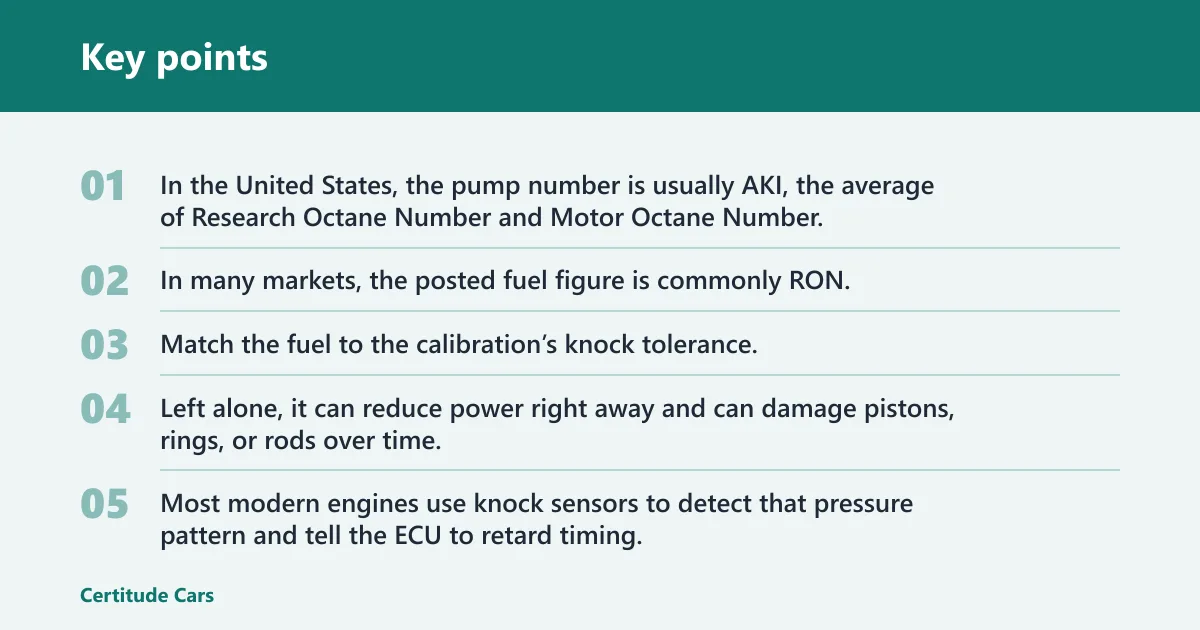
In the United States, the pump number is usually AKI, the average of Research Octane Number and Motor Octane Number. In many markets, the posted fuel figure is commonly RON. A fuel rated at about 98 RON is not the same as 98 AKI, so use the number your tuner or owner’s manual actually specifies.
The point is simple. Match the fuel to the calibration’s knock tolerance. If the engine management was set up around a certain fuel grade, the octane headroom determines how much timing and boost the ECU can keep in place without backing off.
Why higher octane resists knock
Engine knock is abnormal combustion. It usually appears under high load, high intake air temperature, heavy boost, or a high compression ratio. Left alone, it can reduce power right away and can damage pistons, rings, or rods over time.
Most modern engines use knock sensors to detect that pressure pattern and tell the ECU to retard timing. That protection helps, but it does not make the wrong fuel grade safe for a bad tune or a high-load pull.
Why tuned engines need different fuel?
A tune changes the engine’s margin. A stock calibration may leave enough room to handle slight fuel variation, but a remap often adds ignition advance, boost, or both. That can make the same engine far more sensitive to octane, temperature, and sustained load.
How remaps change timing headroom
ECU ignition timing is a calibration choice. More advance can improve torque until knock appears, then the ECU or tuner must reduce timing. With the right fuel grade, the map can keep the timing it was written for. With lower octane, it may pull timing and reduce power.
That is why a car can feel different on the same road after a fuel change. The fuel is not adding extra power. It is letting the calibration keep its planned timing and boost without backing off.
How boost and heat raise knock risk
Forced induction raises cylinder pressure. A turbocharger or supercharger can make a small engine behave like a much more heavily loaded one, especially in hot weather or at sustained high boost. That is why boosted engines often need higher octane than naturally aspirated setups with the same displacement.
Track use magnifies this. Repeated full-load runs raise intake air temperature, and hotter charge air reduces knock margin. A map that is comfortable on a cool street pull can lose timing on a hot day or after several laps.
Why bolt-ons can change the fuel requirement
Performance modifiers do not all change fuel demand in the same way. An intake or exhaust may change airflow and sound more than octane need. An intercooler can reduce charge temperature and help knock margin. Cams, injectors, boost changes, and a remap can shift the requirement more sharply.
That is why “bolt-ons only” is not a single category. Some cars can stay on the manufacturer minimum. Others need a different fuel grade as soon as airflow or boost calibration changes.
Which fuel grade does your modified car actually need?
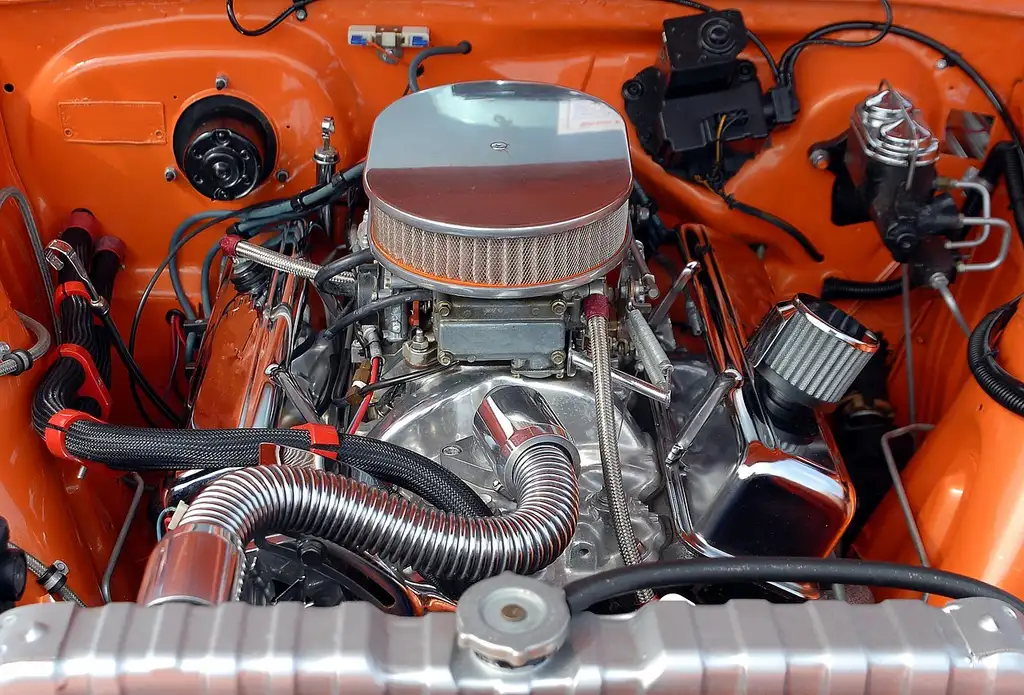
Use the signals below in order. The right answer comes from the calibration, the logged knock behavior, and the engine’s hardware. Do not rely on the highest pump number by itself.
| Branch | Decision signals to check | Safe temporary use | Stop driving and recheck |
|---|---|---|---|
| Stock tune with bolt-ons | Manufacturer minimum fuel spec; tuner file if present; logged knock retard; intake air temperature; boost level; whether the car is calibrated for E10/E85 | Use the posted minimum if the ECU shows little or no knock retard and the tune has no higher fuel requirement. If uncertain, use the tuner’s stated fuel grade until logs are checked. | Stop if timing is being pulled repeatedly under moderate load, if knock retard grows in hot weather, or if the car was tuned for a higher grade than you are using. |
| Remapped turbo/supercharged car | Tuner file; logged knock retard; intake air temperature; boost level; manufacturer minimum; whether the car is calibrated for E10/E85 | If the tuner allows a lower grade for short use, keep load light, avoid boost, and stay out of hot-weather pulls until the correct fuel is available. | Stop if boost is being reduced, if timing is pulled at normal road load, or if the car audibly pings. Recheck the map and fuel grade before any hard driving. |
| High-compression or ethanol-capable build | Manufacturer minimum; tuner file; logged knock retard; intake air temperature; boost level; whether the car is calibrated for E10/E85 | Use only the fuel type and grade named in the calibration. If the build is ethanol-capable, use the exact ethanol blend the tune was written for, not a guess. | Stop if the tune is not matched to the fuel in the tank, if lambda drifts under load, or if the ECU is pulling timing to the point that performance falls off sharply. |
A car with an intake, a downpipe, and a remap that asks for 98 RON may have the ECU start trimming timing on lower-octane fuel. Running 95 RON may not cause a single dramatic event, but the ECU can start trimming timing under load, especially on a warm day. The result is slower acceleration, more heat, and less knock margin.
How timing and knock control work
Ignition advance is what lets the engine make useful pressure at the right point in the cycle. Retard moves that pressure later, which protects the engine but cuts torque. The fuel grade determines how much room the ECU has before it must start backing timing away.
What knock sensors can and cannot do
Knock sensors give the ECU feedback, and the ECU can react by pulling timing. That is useful protection. It is not a cure for a calibration that asks for too much boost, too much advance, or too little fuel under load.
A sensor can also hide the mismatch for a while. The engine may feel fine in gentle driving, then lose power when heat, load, or sustained throttle push it past the sensor’s comfort zone.
How to read knock retard in logs
- Log the right channels. Record ignition timing, knock retard, boost, and lambda on the exact fuel that will stay in the car. Use the same gear and similar ambient temperature when comparing runs, because temperature changes the result.
- Compare load points. Look at part throttle and full throttle separately. A car that is clean at light load can still pull timing hard at high load, where octane demand rises fastest.
- Judge the trend. Small, isolated corrections can happen. Repeated timing pull in the same rpm range means the fuel grade, boost, or AFR target needs attention.
Forced induction, compression, and fuel grade
Turbocharged and supercharged engines are more knock-prone because they raise cylinder pressure. Higher static compression does the same thing, even without boost. Both increase the fuel’s job, so the right octane matters more when the engine is heavily loaded.
Turbocharged and supercharged engines
A boosted engine often needs more octane than the same engine in stock form. That is especially true after a remap that adds boost or advances timing. Hot weather and repeated pulls raise intake air temperature and can move the engine from safe to knock-prone very quickly.
Picture a 2.0-litre turbo car with a stage 1 map on a warm afternoon. On the correct fuel, the ECU may hold the timing target. On a lower grade, it may keep the engine alive by pulling timing and closing boost, which makes the car slower even though the throttle is wide open.
High-compression naturally aspirated engines
Higher compression usually raises octane demand because the mixture is squeezed harder before ignition. That can matter on modified naturally aspirated engines, especially if cam timing, chamber design, or ignition mapping have already reduced the safety margin.
Fuel grade still matters even without a turbo. A high-compression setup can knock under load if the octane is too low for the tune, especially on hot days or when the engine is held near redline for long periods.
Why hot weather and track use matter
Heat lowers knock margin. Track use increases heat load, and repeated pulls can make the ECU pull more timing on the same fuel grade than it would on the street. That is why a tune should be checked on the fuel the car will see at its worst operating point, not only in mild conditions.
Does higher octane fuel make a tuned car faster?
Sometimes. Higher octane can free the ECU or tuner to hold more timing and boost if the calibration was limited by knock on the lower grade. If the map was already safe on the lower grade, the higher number may change little or nothing.
When higher octane can add power
If the tune was written with octane headroom, a better fuel can reduce timing retard and let the engine stay on its target map. That can improve torque, response, and repeatability. The gain comes from the calibration staying where it was intended, not from extra energy in the fuel.
When it changes nothing
If the ECU was already running the same timing on the lower grade and showing no knock retard, the extra octane may not produce a measurable change. Some stock cars with mild bolt-ons fall into this group. The only clean way to know is to compare logs or dyno runs on the exact fuel grade.
Why the tune decides the answer
The tune sets the ceiling, and higher octane cannot fix a poor AFR target, excessive boost request, or insufficient fuel volume. Higher octane cannot fix a poor AFR target, an oversized boost request, or a fuel system that cannot supply enough volume. Fuel grade is one part of the calibration, not a substitute for correct mapping.
What to do if you must run a lower grade
Lower octane can be used temporarily only when the calibration allows it. Keep load light, avoid boost where possible, and plan to refill with the correct fuel as soon as practical. If the map was written for a higher grade, treat low-octane use as a short-term compromise, not a normal setup.
- Check the minimum spec. Confirm the manufacturer’s minimum and the tuner’s stated requirement. If the tuner requires a higher grade than the manual, follow the tuner file for that calibration.
- Reduce load immediately. Drive gently, avoid wide-open throttle, and keep intake temperatures down. This limits knock risk while you reach the proper fuel.
- Watch for timing pull. If the ECU starts pulling timing, if boost is being cut, or if the engine sounds rough under load, stop hard driving and recheck the fuel grade and tune.
A common first-timer mistake is assuming that a knock sensor makes any fuel acceptable. It does not. If the ECU is constantly retreating timing to protect the engine, the car may be running safely for the moment, but it is no longer running as intended.
Frequently asked questions
Will premium fuel fix knock on a modified engine?
Not if the calibration is wrong. Premium fuel can increase knock margin, but it cannot fix an unsafe AFR, excessive boost, or too much ignition advance. If the engine still knocks on the correct fuel, the tune needs to be checked before more hard driving.
Can I run regular fuel after a remap?
Only if the tuner says the map is safe for that grade. Many remapped turbo or high-compression engines are calibrated for a specific octane level. Running regular fuel can trigger timing retard, cut power, and increase knock risk under load.
What fuel grade should I use after tuning my car?
Use the grade named in the calibration file or by the tuner. If the tune says 98 RON, use 98 RON or the stated AKI equivalent. If there is any mismatch between the manual and the tune, the tune’s requirement for that calibration is the one that matters.
Does a tune need 95 RON or 98 RON?
It depends on the map, boost level, compression ratio, and ambient temperature. A mild stock-like tune may run on 95 RON. A more aggressive remap, especially on a turbocharged engine, often needs 98 RON to keep timing stable and avoid knock.
Can the wrong fuel grade damage a modified engine?
Yes. Low octane can force repeated timing pull, and sustained knock can damage pistons, rings, plugs, or rods over time. The danger rises with boost, heat, and load. A knock sensor can reduce risk, but it cannot make the wrong grade harmless.