Battery Light and Overheating Together: Could a Belt Be Slipping?
When battery and temperature warnings appear together, a slipping or broken serpentine belt, or a belt-driven water-pump fault, is often reported as more likely than a bad alternator. If the engine is overheating, pull over as soon as it is safe and shut it down to help avoid engine damage. Ignore it, and you can drain the battery, overheat the engine, and turn a simple belt repair into a tow and major cooling-system bill. This guide shows the fault patterns, quick checks, and what to do next.
What the two warnings mean together
The battery light means the charging system is not charging the battery while the engine runs. When the temperature gauge rises at the same time, the fault often points first to the serpentine belt, belt tensioner, or a belt-driven accessory, because one failed drive path can affect charging and cooling at once.
The alternator supplies electricity while the engine runs, but it does not work alone. A serpentine belt drives the alternator, and on some cars it also drives the A/C compressor and water pump. That is why one belt problem can create a low-charge warning and a heat problem in the same drive cycle.
Battery warning pattern table
| Symptom | Most likely cause | Why it fits | What to check next | Whether to stop driving |
|---|---|---|---|---|
| Squeal, battery light, hot engine | Slipping serpentine belt or failed tensioner | A loose, glazed, cracked, or worn belt can slip under load and reduce alternator output; if the same belt also drives the water pump, temperature can rise quickly. | Listen for squeal, look for belt glaze or cracks, and check tensioner movement. | Yes, if the temperature gauge is rising. |
| Battery light, warm A/C air | Broken or slipping accessory belt | The belt may drive the A/C compressor, so cooling can drop out at the same time the alternator output falls. | Check whether the belt is present, intact, and turning the compressor pulley. | Usually yes if the belt is missing or loose. |
| Battery light, heavy steering, rising temp | Belt slip, belt breakage, or tensioner failure | Many cars use the same belt for power steering assistance, charging, and sometimes the water pump, so multiple loads can fail together. | Check steering effort, belt condition, and whether the temperature gauge keeps climbing. | Yes, stop if the gauge rises. |
| Battery light only, normal temp | Charging fault, loose terminals, or ground issue | The engine may still be cooling normally while the electrical system is not recharging the battery. | Inspect battery terminals, grounds, and charging voltage. | Maybe briefly, but limit distance and load. |
| Battery light, battery drain after short drive | Alternator fault or belt slip reducing output | The car may be running on stored battery power, then the battery drains because recharge is weak or absent. | Measure running voltage and look for belt slip first, then alternator output. | Yes, if starting becomes weak or lights dim. |
Could a slipping belt cause both warnings?
Yes. A slipping belt can reduce alternator output, which brings on the battery light, and it can also reduce the speed of belt-driven accessories. If the belt turns the water pump on that engine, coolant flow can fall enough for the temperature gauge to climb.
Belt slip
A slipping belt usually shows up with squeal, flicker, or symptoms that worsen when electrical load increases. Turn on headlights, rear defrost, and blower. If the belt noise gets louder or the battery light gets brighter, the belt or tensioner moves higher on the list.
A common first-timer mistake is to assume any battery light means the alternator has failed. A cracked, glazed, loose, or broken serpentine belt can cause the same warning, and it may be the first part to inspect because it is visible and inexpensive compared with a full alternator replacement.
Belt breakage
A broken belt is more obvious. The engine may lose charging immediately, the A/C may go warm, and steering effort can rise if the vehicle uses a belt-driven power steering pump. If the same belt drives the water pump, overheating risk rises fast.
Say your battery light comes on, the A/C turns warm, and the steering wheel suddenly feels heavy at a stoplight. That pattern points more toward a broken or slipping accessory belt than a charging regulator fault, especially if the temperature gauge starts moving upward in the same minute.
Belt-driven water pump failure
Some cars rely on the serpentine belt to turn the water pump. In that layout, a slipped belt can reduce coolant circulation, and a broken belt can stop it. That is why overheating with the battery light deserves faster action than a battery light alone.
Picture a V6 with a belt that still looks intact but is glazed and noisy. If the temperature gauge keeps climbing while the battery light stays on, the problem may be belt slip at the water pump pulley, not only low alternator output.
Belt, alternator, or tensioner?
Check the belt, battery terminals, and grounds before replacing major parts. Then measure charging-system voltage with the engine running, because output at the battery posts can separate a belt problem from an alternator fault or a wiring issue.
Battery terminals and ground connections
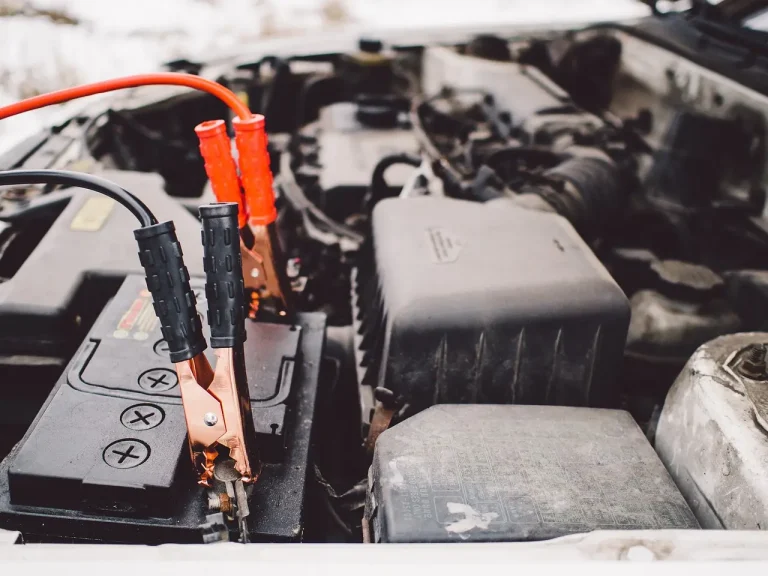
Corroded or loose battery terminals can mimic charging problems. Loose or corroded ground connections can interrupt charging as well. Check both before condemning the alternator, because poor connections can trigger the battery light even when the alternator itself is still capable of output.
Charging-system voltage check
Charging voltage with the engine running can vary by vehicle and charging strategy. A reading that is persistently low points to a charging fault, especially if electrical loads make it drop further. That reading helps separate weak charging from a simple dash warning caused by a loose connection.
Switch on the headlights, blower, and rear defrost if the car has them. If the voltage falls off sharply with load, that supports a charging-system fault. If the belt is noisy or visibly loose at the same time, belt slip moves higher on the list than alternator failure.
What alternator trouble looks like
An alternator can fail internally or through its regulator, and it can still look fine from the outside. If the belt is intact, tensioner movement is normal, terminals are clean, grounds are solid, and voltage is still low with the engine running, the alternator deserves close attention.
Light dimming, a battery that drains after a short drive, and a running-voltage reading outside the normal operating range all fit poor alternator output. Even then, the belt should still be checked first, because a slipping belt can make a good alternator look bad on paper.
Why overheating changes the risk
Overheating raises the stakes because engine damage can start quickly, especially if the belt drives the water pump. A battery light alone may allow a short, careful drive to a repair shop, but a climbing temperature gauge changes that answer. Stop driving when the gauge rises.
When the belt drives the water pump
If the water pump depends on the serpentine belt, belt slip can cut coolant flow. That is different from a charging fault that only affects the battery. In that setup, the engine may overheat before the battery is fully drained.
When to stop driving at once
If the belt is broken, the temperature gauge rises, or there is a squeal plus rising heat, pull over and stop. With the battery light on, drivers should switch off nonessential electrical loads, but that is only a short-term measure. It does not make an overheating engine safe to keep driving.
-
Check the temperature gauge.
If the needle is climbing or the temperature warning lamp is on, stop driving. Heat damage can follow fast when the belt drives the water pump.
-
Look and listen for belt problems.
Open the hood only if it is safe, then check for a missing belt, cracks, glazing, looseness, or a loud squeal. If the engine is running, keep hands, clothing, and tools away from moving belts and fans. A belt that is off, shredded, or slipping changes the diagnosis immediately.
-
Check steering and A/C behavior.
Heavy steering, a warm A/C vent, or both suggest accessory loss. That pattern helps separate a belt problem from a stand-alone alternator failure.
-
Inspect terminals and grounds.
Look for white or green corrosion, loose clamps, or a damaged ground strap. These faults can produce a battery light even when the alternator and belt are not the only issue.
-
Measure running voltage.
If you have a voltmeter, check the battery with the engine running. A low reading points to a charging fault.
What to check first at the roadside
First, decide whether this is a heat problem or mainly a charging problem. If the temperature gauge is rising, shut the engine down. If the engine temperature is normal, reduce electrical load, then inspect the belt, terminals, grounds, and charging voltage in that order.
That order matters because a visible belt fault can explain more than one symptom at once. It also keeps you from replacing an alternator when the real issue is a belt that cannot drive it properly.
Quick roadside order
-
Turn off extra loads.
Switch off the rear defrost, seat heaters, and other nonessential electrical loads. This reduces demand while you decide whether the car can be moved safely.
-
Watch the temperature gauge.
If it is rising, stop. If it is steady and normal, you may have a charging fault without a cooling fault, which is less urgent but still needs repair soon.
-
Inspect the belt path.
Look for a missing belt, belt dust, a shiny glazed surface, or a tensioner that wobbles or sits at an odd angle. A failed tensioner or pulley can let the belt slip even when the belt itself is not torn.
-
Check battery and grounds.
Make sure the battery posts are tight and clean, and confirm the main ground connections are secure. A bad connection can mimic a weak alternator.
-
Get a voltage reading.
Use a voltmeter if one is available, or have the charging system checked as soon as possible. Low running voltage confirms the system is not charging the battery normally.
Frequently asked questions
Could a slipping belt cause the battery light and overheating together?
Yes. A slipping serpentine belt can reduce alternator output and can also slow a belt-driven water pump on some cars. That combination can trigger the battery light and push the temperature gauge upward in the same drive.
Is it safe to keep driving if the battery light and temperature gauge are both on?
No. If the temperature gauge is rising, stop driving. The battery light alone may allow a short trip, but overheating changes the risk because a belt-driven water pump may be losing flow.
What other symptoms point to a broken serpentine belt instead of an alternator?
Warm A/C air, heavy steering, squeal, and a sudden rise in temperature all fit belt loss better than a stand-alone alternator fault. If the belt also drives the water pump, the engine can overheat quickly.
Why would the A/C go warm when the battery light comes on?
Many cars use the accessory belt to drive the A/C compressor. If the belt slips or breaks, the compressor may stop cooling at the same time the alternator output falls. Warm air from the vents is a useful clue that the belt path, not only the alternator, needs inspection.
How do I tell if the problem is the belt, alternator, or tensioner?
Check the belt first for cracks, glaze, looseness, or breakage. Then inspect the tensioner and pulley for poor alignment or weak tension. After that, measure charging voltage with the engine running. A low reading points to a charging fault.
What should I check first when the battery light comes on while driving?
First, check the temperature gauge. If it is rising, stop driving. If temperature is normal, reduce electrical load, then inspect the belt, battery terminals, and ground connections before replacing the alternator.